

Making your meme…
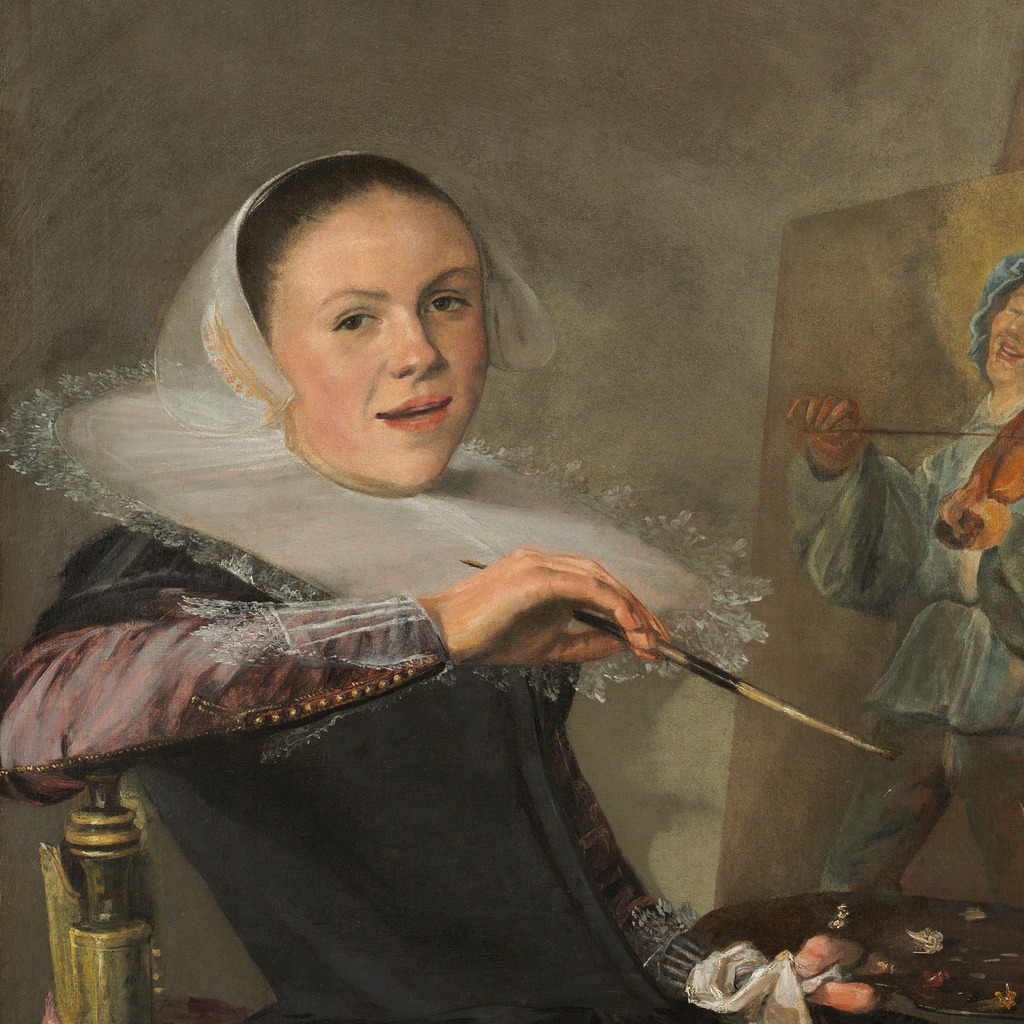
Judith Leyster · c. 1630
Judith Leyster face swap
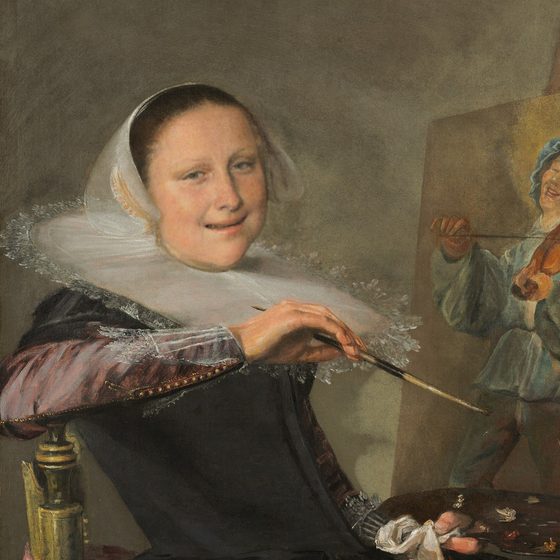
A painter turning from her easel mid-brushstroke, caught looking pleased about it.
or
Under 15 seconds · no sign-up · your selfie is never stored
Or become a patron and stop counting. Already a patron? Sign in.
How it works
-
Take a photo
Front camera, decent light, look straight ahead. Or pick one you already have.
-
We paint you in
Your face goes into the painting, keeping its light and its brushwork. About fifteen seconds.
-
Share the link
You get a page anyone can open. No account, nothing to install.
Where this one comes from
Judith Leyster painted herself around 1630 in Haarlem, in her early twenties, and used the picture as a calling card: she was admitted to the painters’ guild there in 1633, one of a very small number of women ever to be. After her death her paintings were quietly reassigned to Frans Hals and stayed under his name for two hundred years, until a monogram was noticed during a lawsuit in 1893 and the whole body of work had to be handed back to her.
What is in the picture
She has swung round in the chair with a brush in one hand and eighteen more plus a palette in the other, and on the easel behind her is a grinning fiddler — a figure from one of her own genre scenes, painted inside her own portrait. The white collar is enormous and the paint in it moves fast and loosely, which is exactly the Haarlem manner that later let people mistake her for Hals. Her mouth is open as if she has just been interrupted and does not mind.
When people use it
For being caught enjoying your own work. It is the picture for the message sent while you are still mid-task and pleased with how it is going, and it survives being used sincerely.
How your face lands in it
Her face is close to the front, well lit, and framed underneath by the broad flat white of the collar, which makes a bright shelf that holds the finished result together. Note that the original mouth is slightly open and smiling: this is one of the few pictures on the site where a photograph of you actually grinning is the closer match, and a stern one looks out of place.
Self-Portrait — Judith Leyster, c. 1630. Judith Leyster died in 1660, which puts the painting in the public domain many times over, and the Google Art Project photograph of it is published as public domain. Source

Also in: Paintings · Self-portraits · Baroque · Dutch Golden Age
More paintings
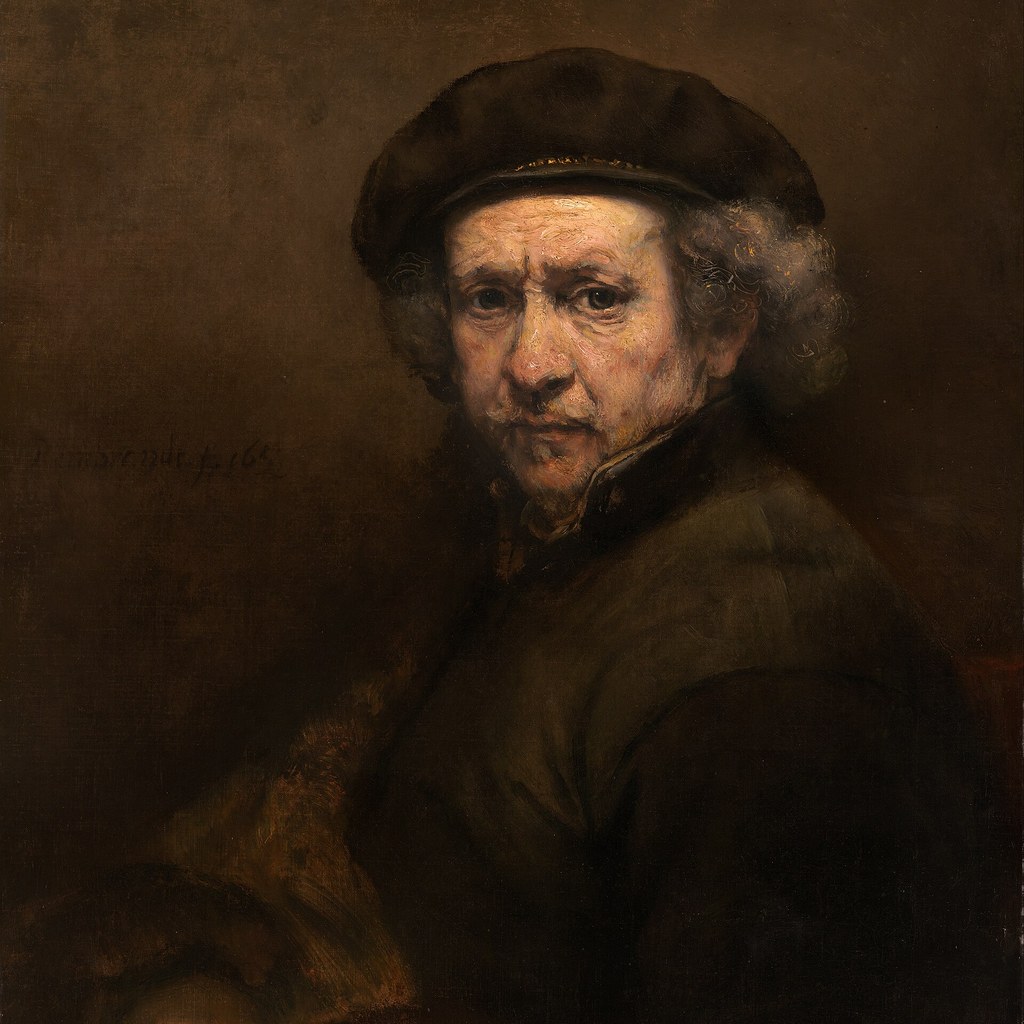 Rembrandt's Self-Portrait
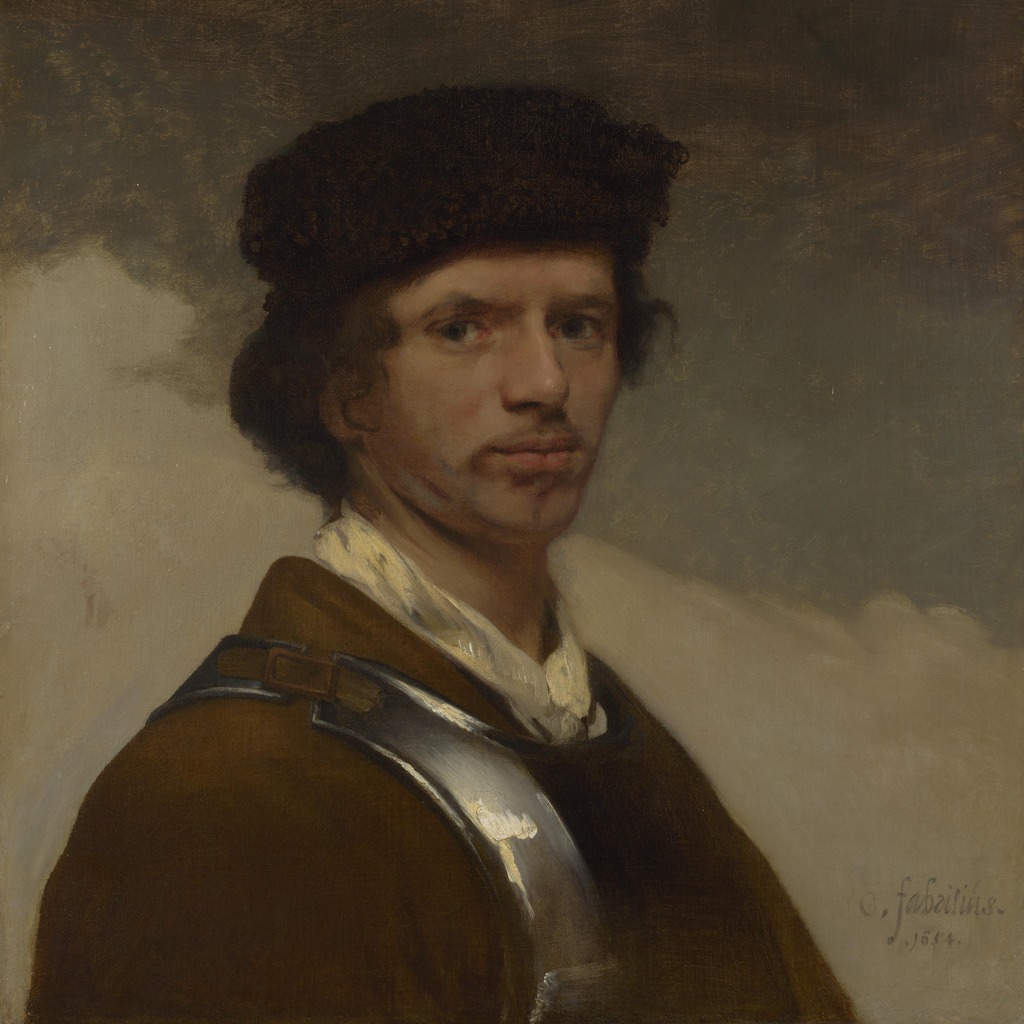 Carel Fabritius
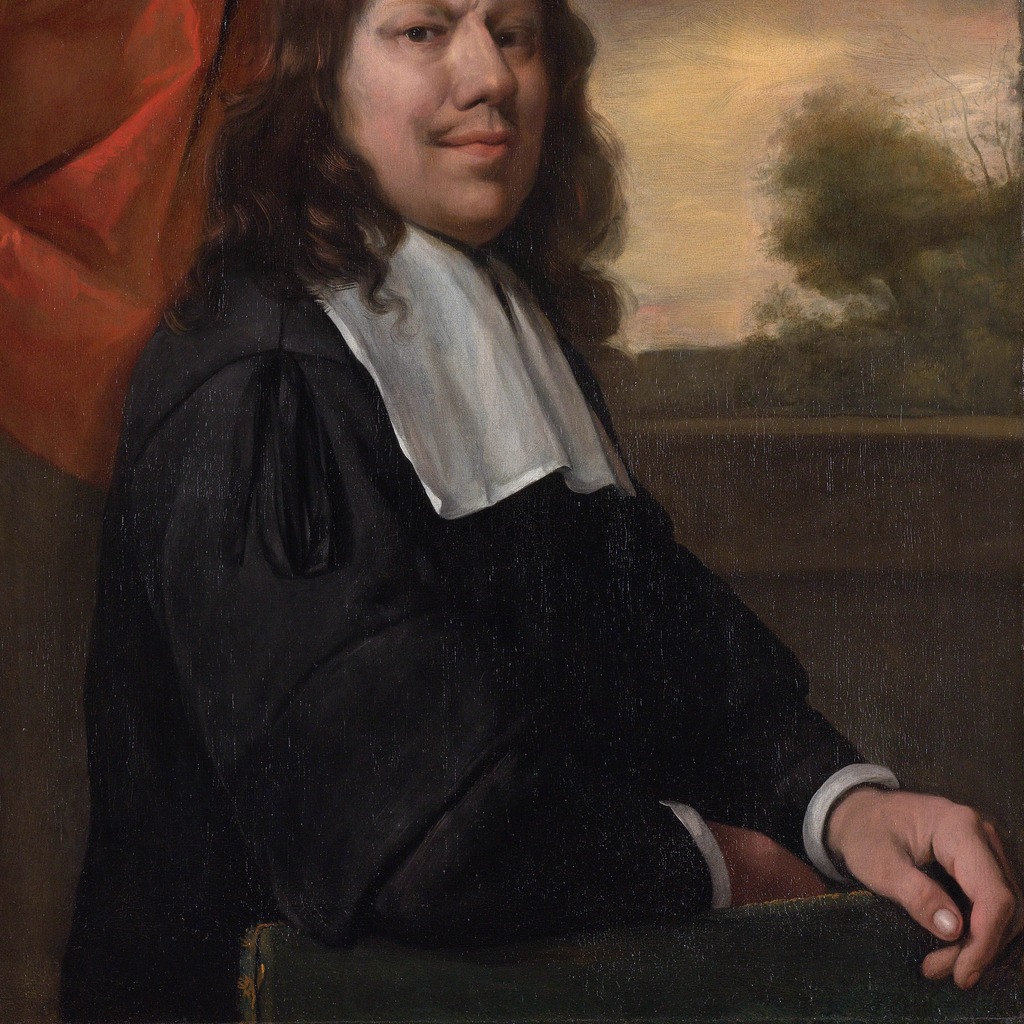 Jan Steen
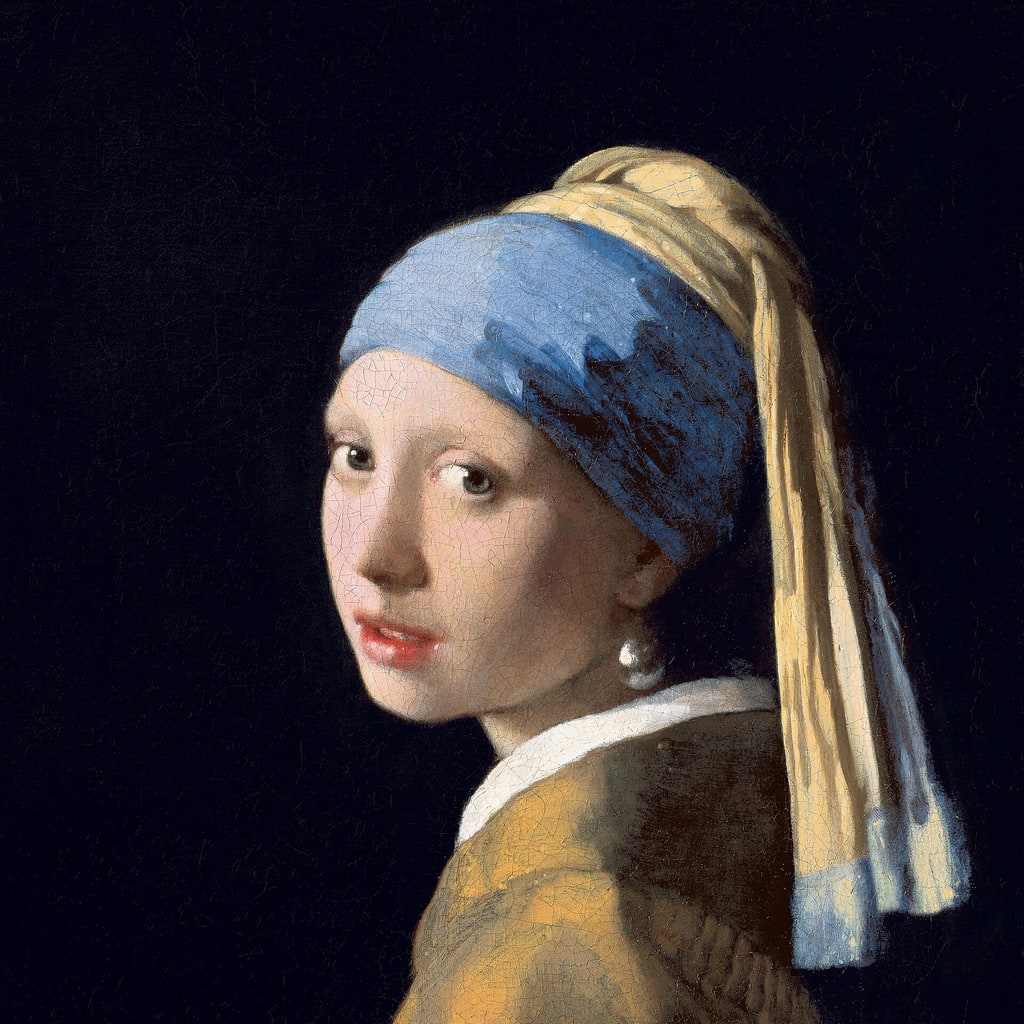 Girl with a Pearl Earring
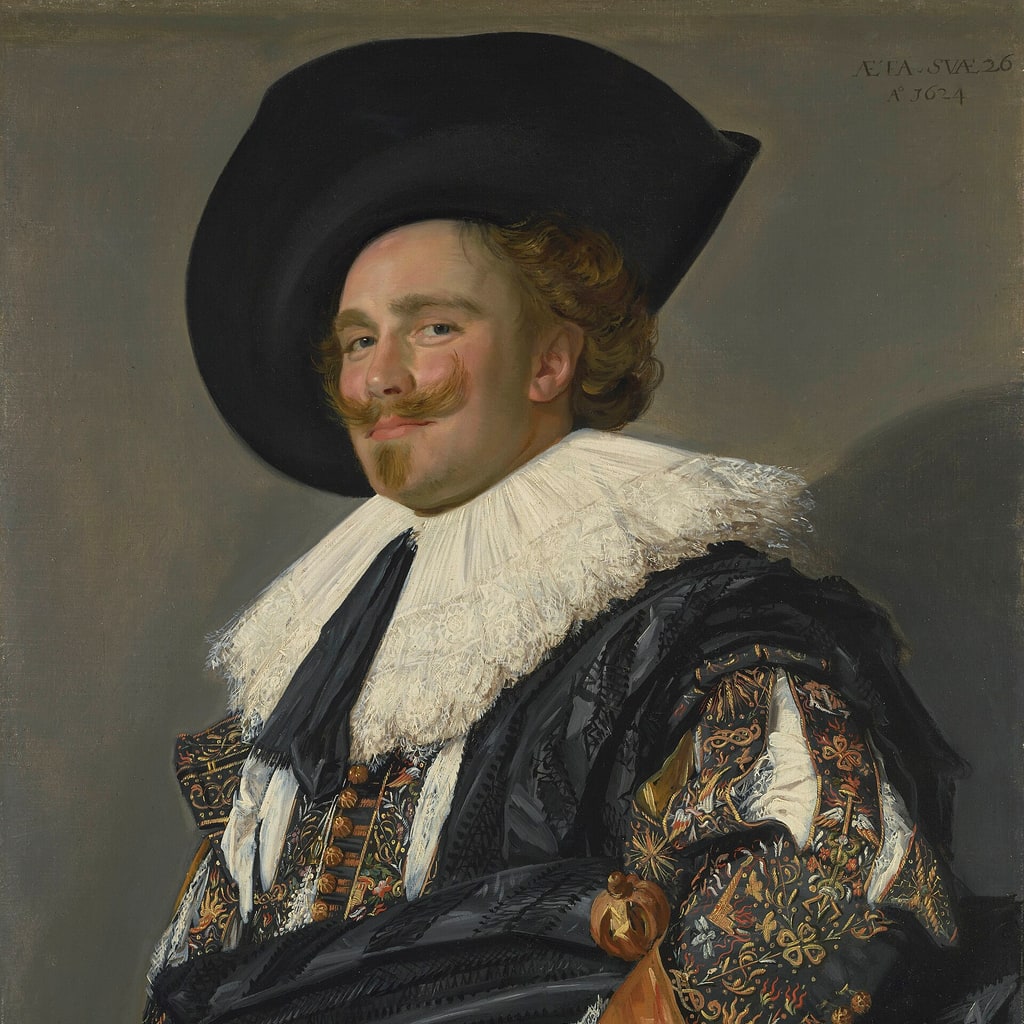 The Laughing Cavalier
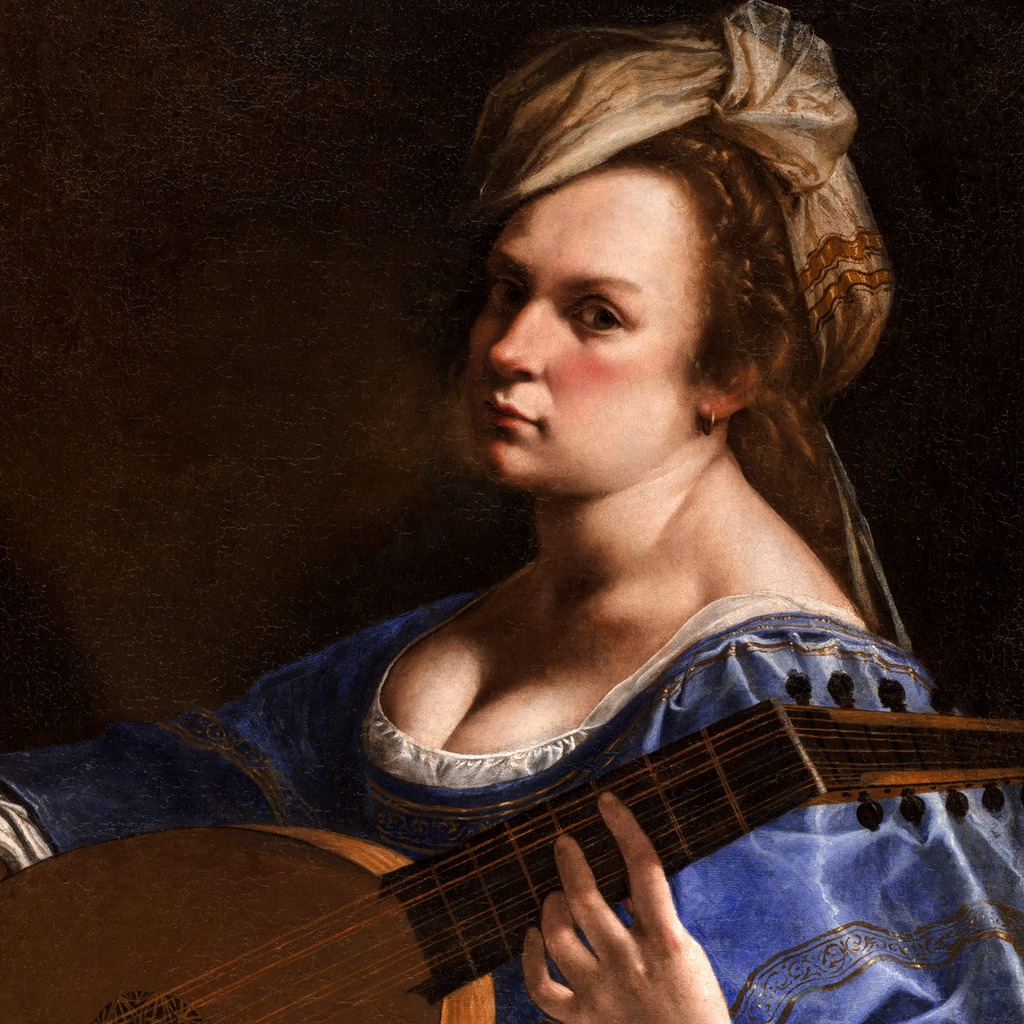 Artemisia's Self-Portrait
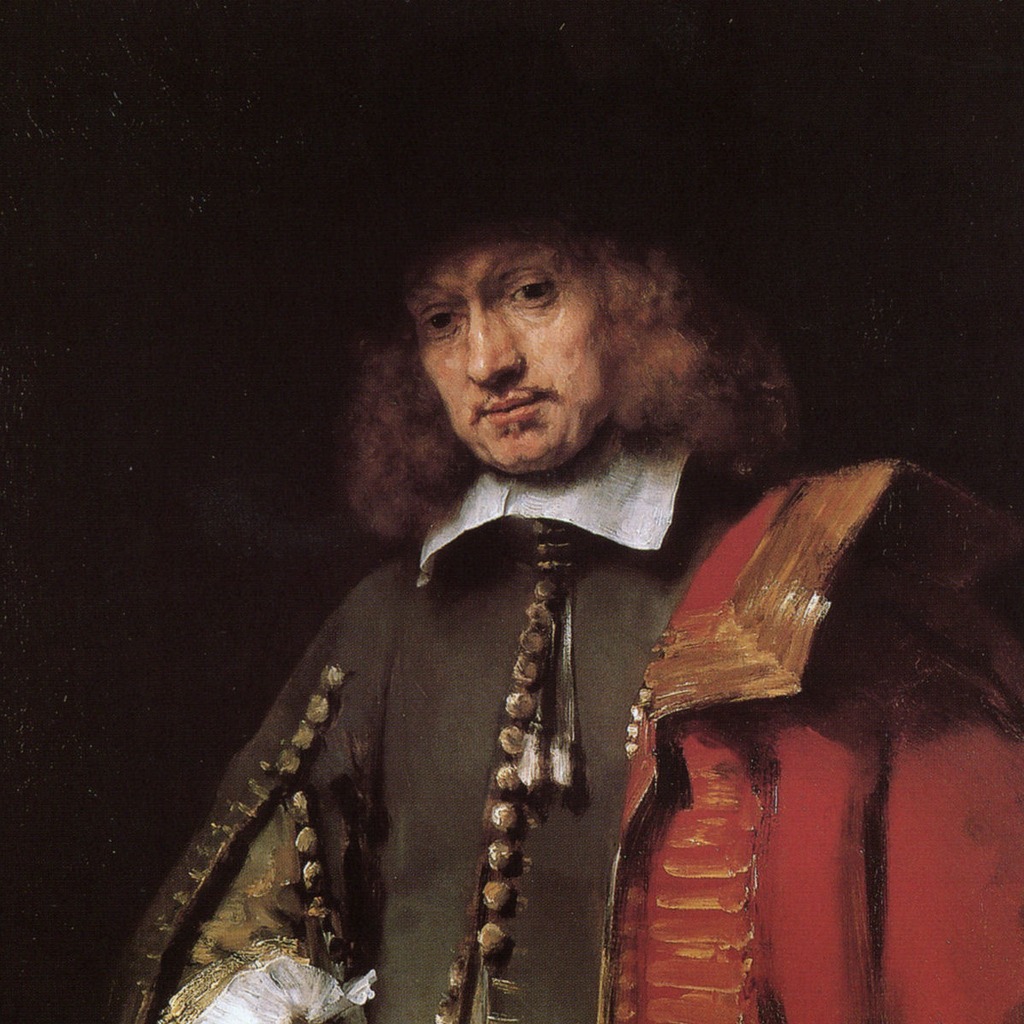 Jan Six
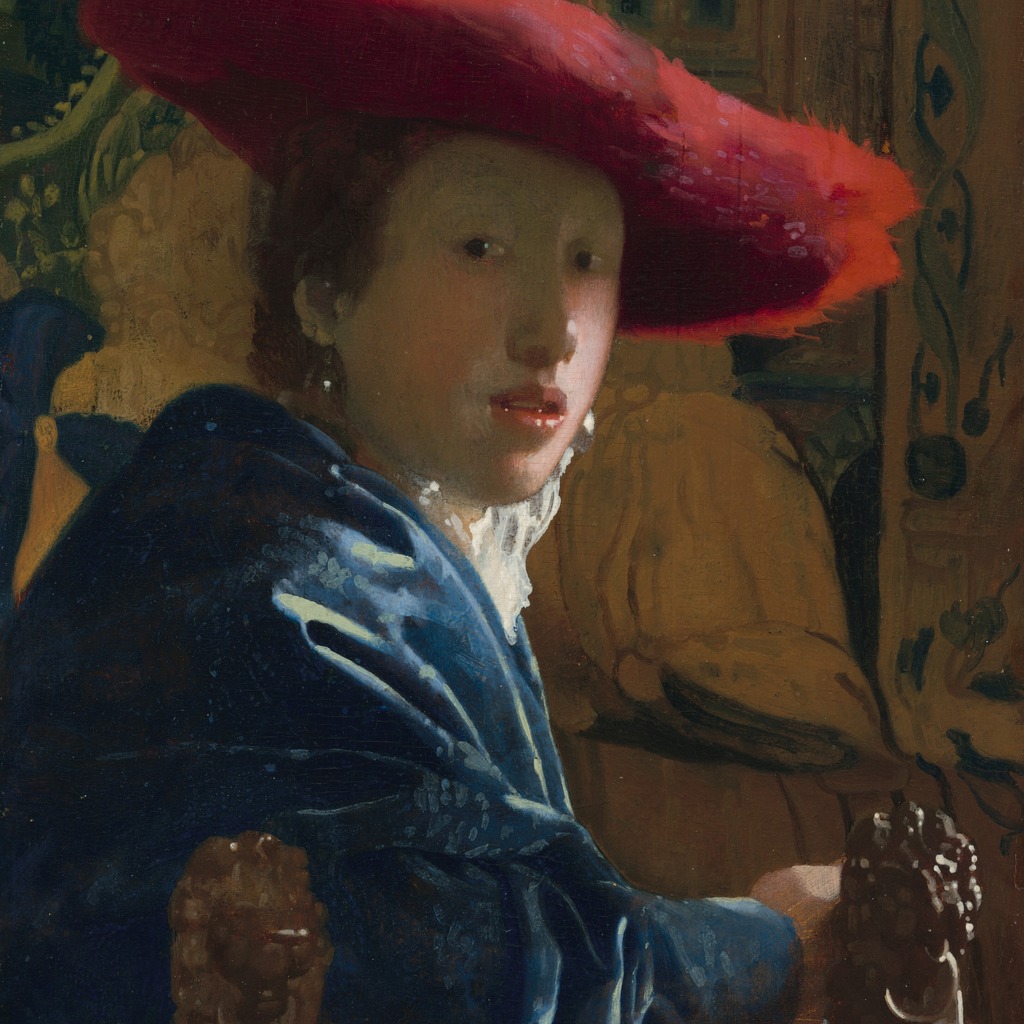 Girl with a Red Hat
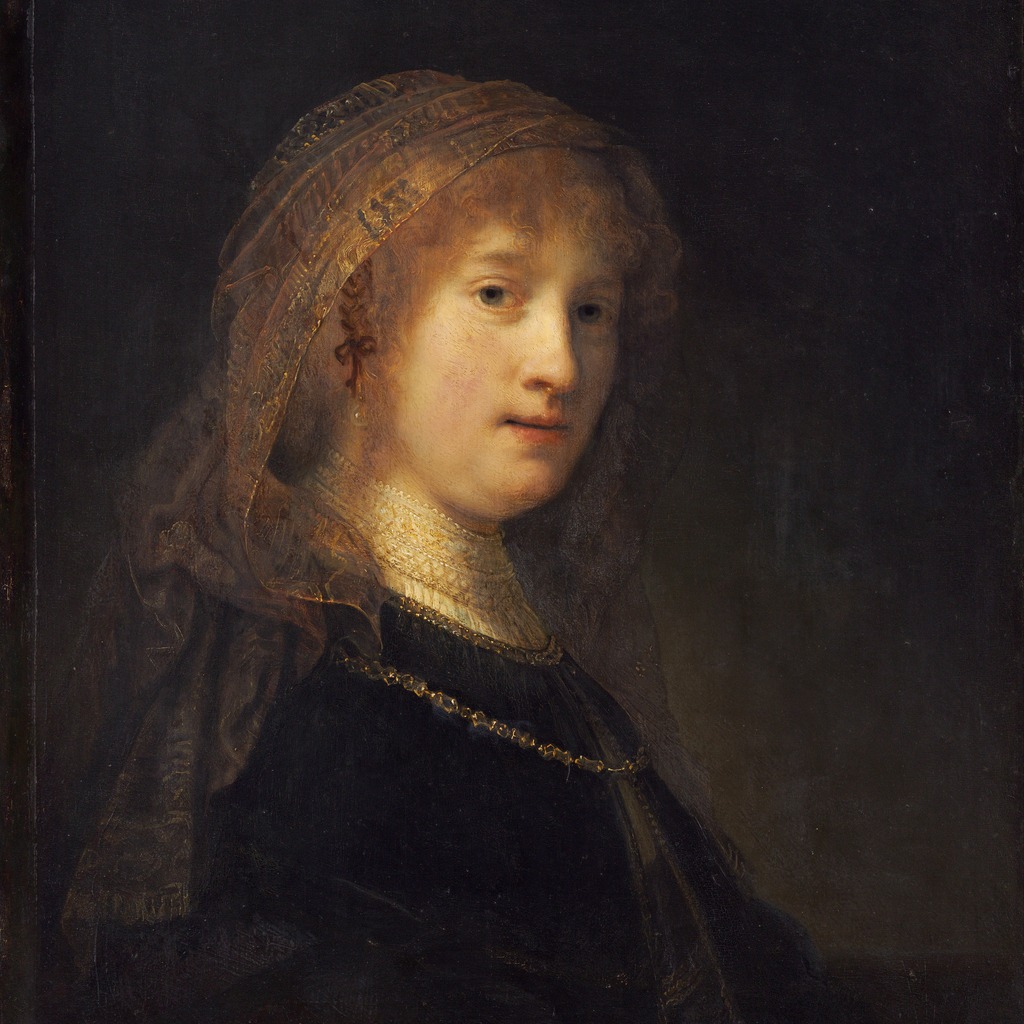 Saskia
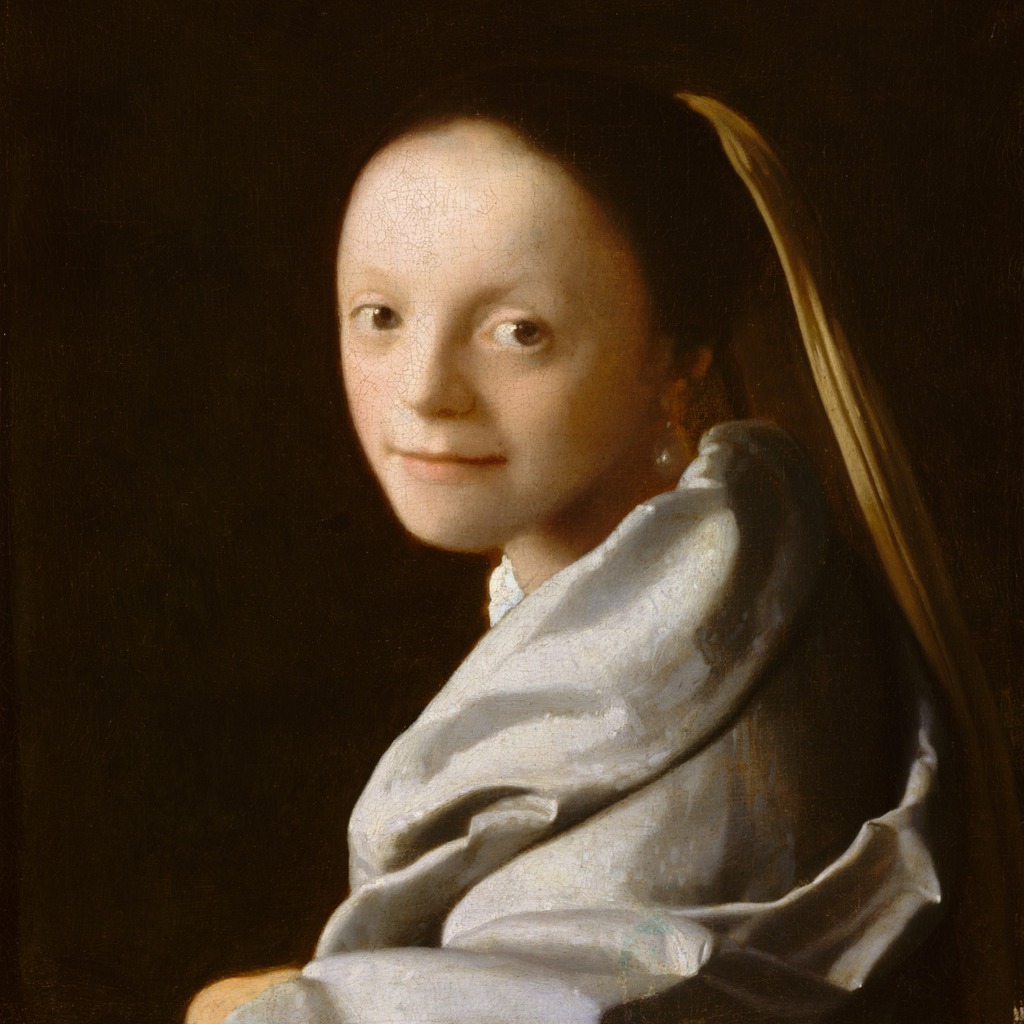 Portrait of a Young Woman
 Bearded Man with a Ruff
 Aristotle with a Bust of Homer
 Rubens
 Ter Borch: Portrait of a Man
 Malle Babbe
 La Bohémienne
 Mona Lisa
 Van Gogh Self-Portrait
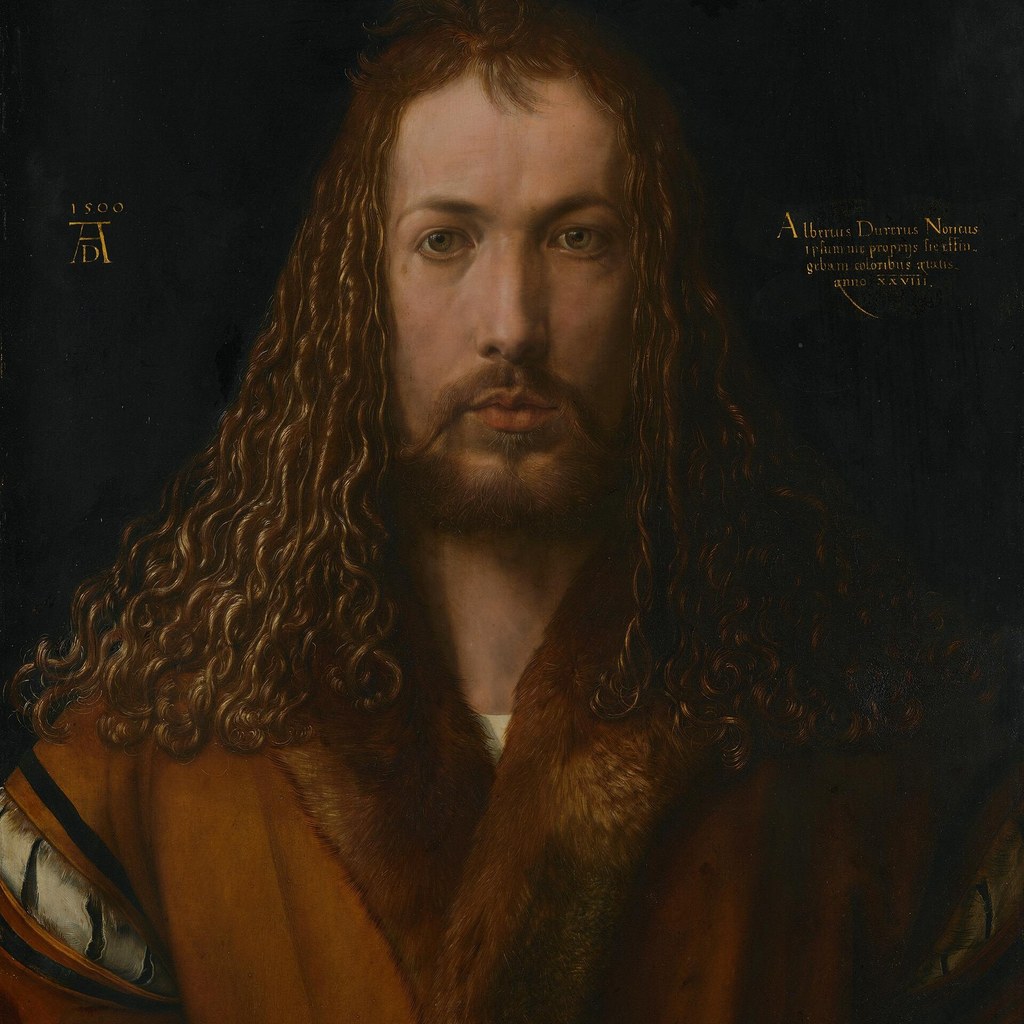 Dürer's Self-Portrait
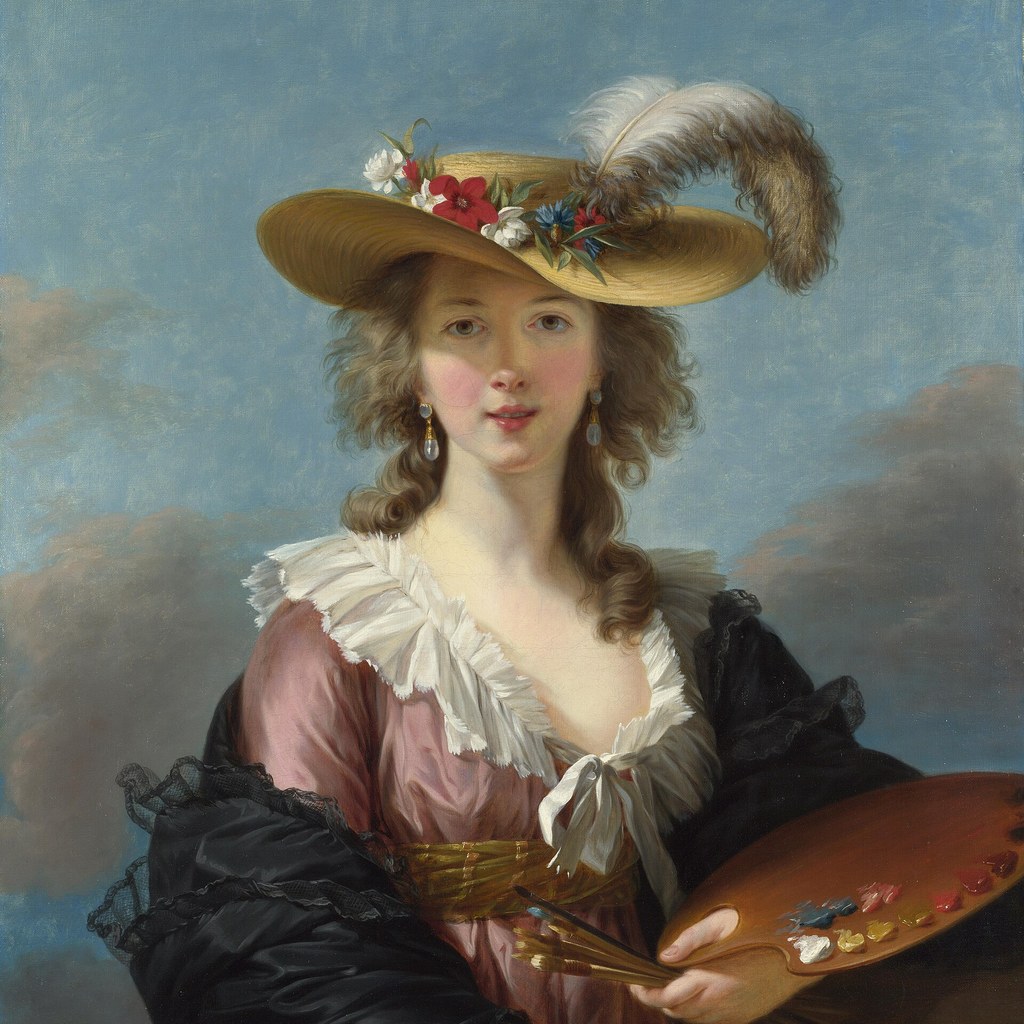 Self-Portrait in a Straw Hat
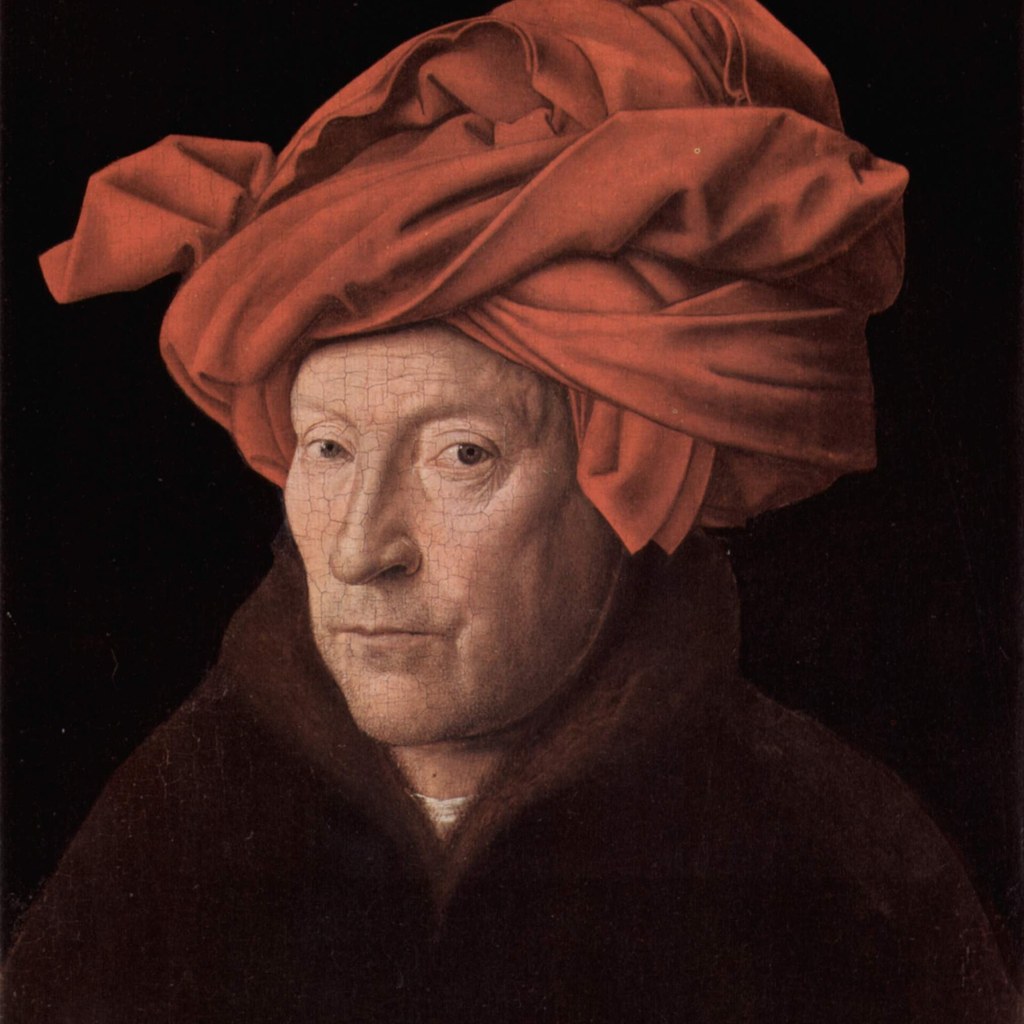 Man in a Red Turban
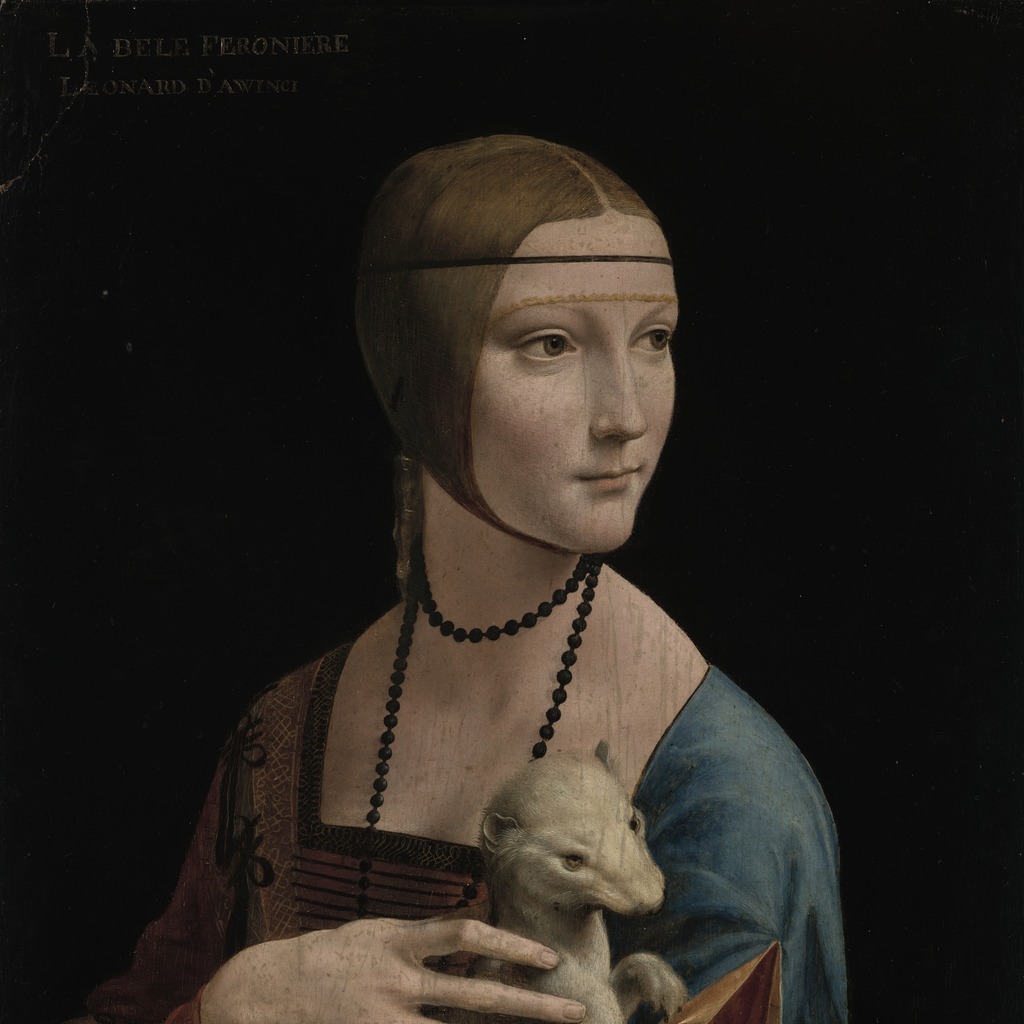 Lady with an Ermine
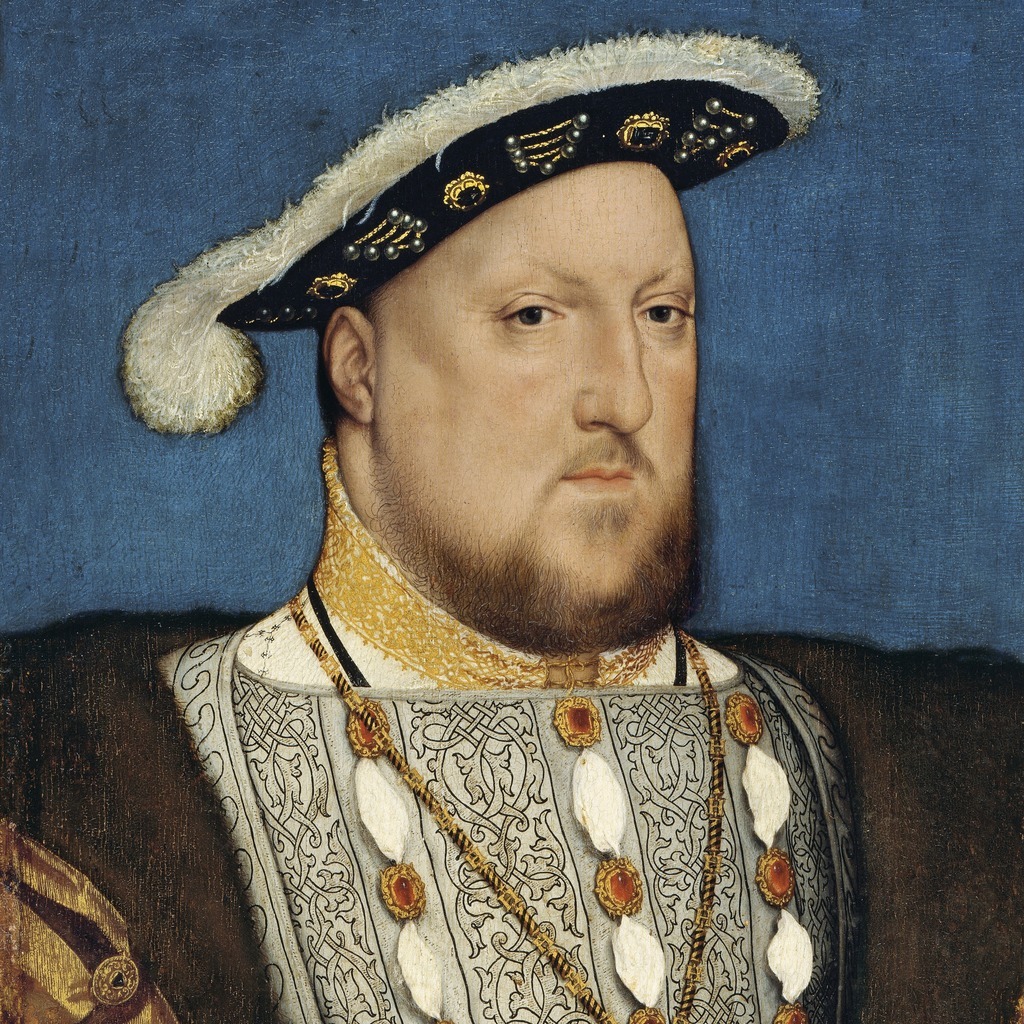 Henry VIII
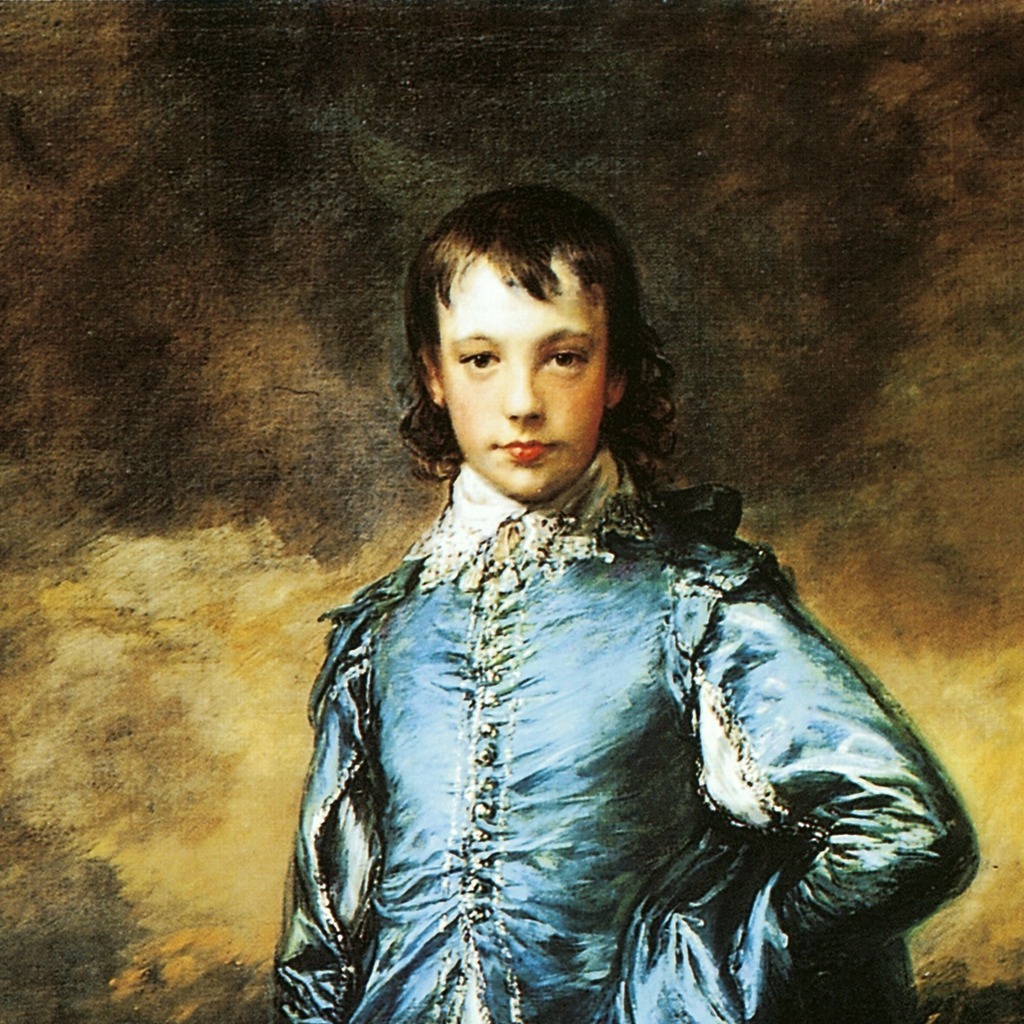 The Blue Boy
Questions
Why was her work credited to Frans Hals?
Because the market preferred a famous name. Her pictures were relabelled after her death and hung as his for roughly two centuries; the deception was exposed in 1893 during litigation over a painting sold as a Hals that turned out to carry her monogram.
What is her monogram?
A J and an L with a star. Leyster means lodestar in Dutch — the pole star — and her family’s brewery in Haarlem was called the Lodestar, so the signature is a pun on her own name.
What is the picture on her easel?
A fiddler, of the kind she painted for the ordinary market in genre scenes. Putting one of her own saleable pictures inside her self-portrait is a demonstration of range: here is the painter, and here is what the painter can sell you.
Is it free?
Yes. There is a limit on how many you can make in a day, and sharing one earns the allowance back.
Do you keep my photo?
No. Your selfie is used to make the image and then dropped — it is never written to disk. The finished meme is stored, because it has a link people can open, and it is deleted after 90 days.
Can I use someone else’s face?
Please do not. Use your own. Putting a real person into a picture they did not agree to is exactly the thing this is not for.
Can I post the result?
Yes, anywhere you like. The paintings are public domain; what you make with your own face is yours.