

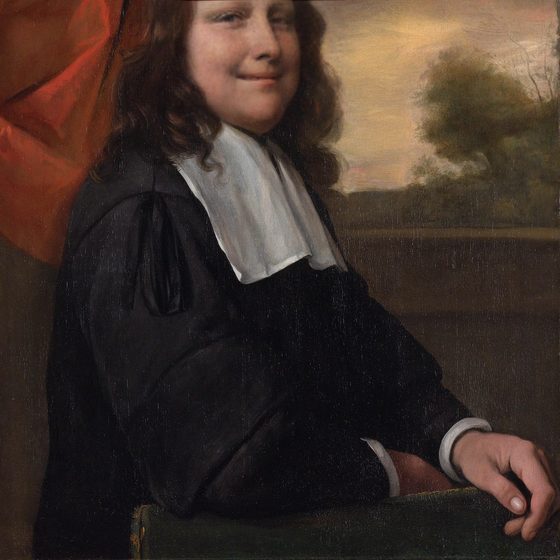
Making your meme…
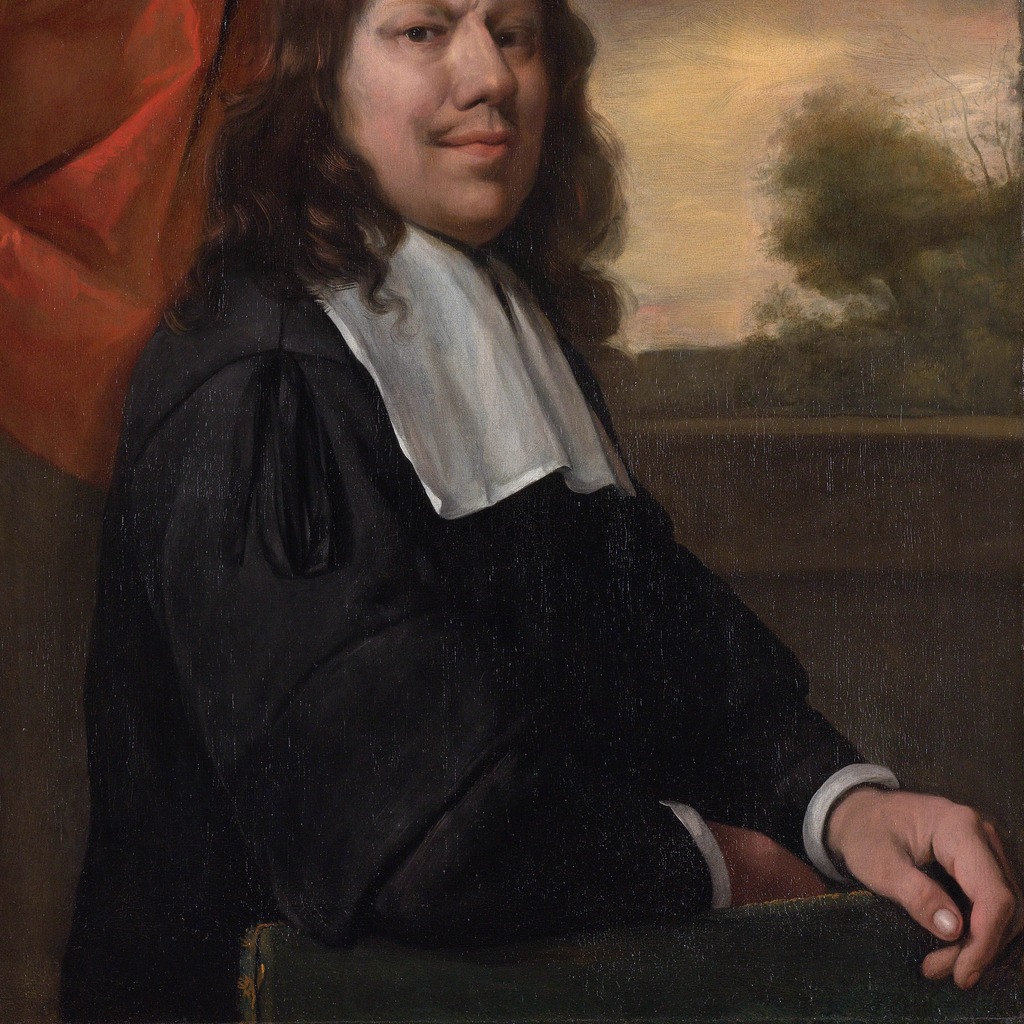
Jan Steen · c. 1670
Jan Steen face swap
The painter of disorderly households, grinning, entirely aware of what he was selling.
or
Under 15 seconds · no sign-up · your selfie is never stored
Or become a patron and stop counting. Already a patron? Sign in.
How it works
-
Take a photo
Front camera, decent light, look straight ahead. Or pick one you already have.
-
We paint you in
Your face goes into the painting, keeping its light and its brushwork. About fifteen seconds.
-
Share the link
You get a page anyone can open. No account, nothing to install.
Where this one comes from
Jan Steen painted himself around 1670, laughing, in the Rijksmuseum’s panel. He made his living from pictures of households falling apart — drunk parents, feral children, a dog on the table — and he put himself into a great many of them as the worst-behaved person in the room. He also ran a brewery in Delft and later a tavern in Leiden, so he had material.
What is in the picture
He leans back with an arm over the chair, mouth open in a laugh that shows teeth — rare in a century of closed-mouth portraits — in a loose dark coat, against a plain warm ground. Dutch has a phrase, a Jan Steen household, meaning a place in cheerful chaos, and it comes directly from his pictures. The joke of the self-portrait is that he is both the moralist painting the disorder and the man most visibly enjoying it.
When people use it
For admitting it was your fault and being pleased about it. It is the face for confessing to something minor and unrepentant, and it is one of the few pictures here that is openly having a good time.
How your face lands in it
An open-mouthed laughing face is an unusual target: your own photograph supplies the features, but the expression belongs to the painting, so the closer you can get to a genuine grin the better this works. The head is turned and lit from the left, with long hair framing it, and the hair stays. A deadpan photograph here produces an odd hybrid, so bring a cheerful one.
Self-Portrait — Jan Steen, c. 1670. Jan Steen died in 1679, so the painting has been in the public domain for centuries, and the Rijksmuseum reproduction is published as public domain. Source

Also in: Paintings · Self-portraits · Baroque · Dutch Golden Age
More paintings
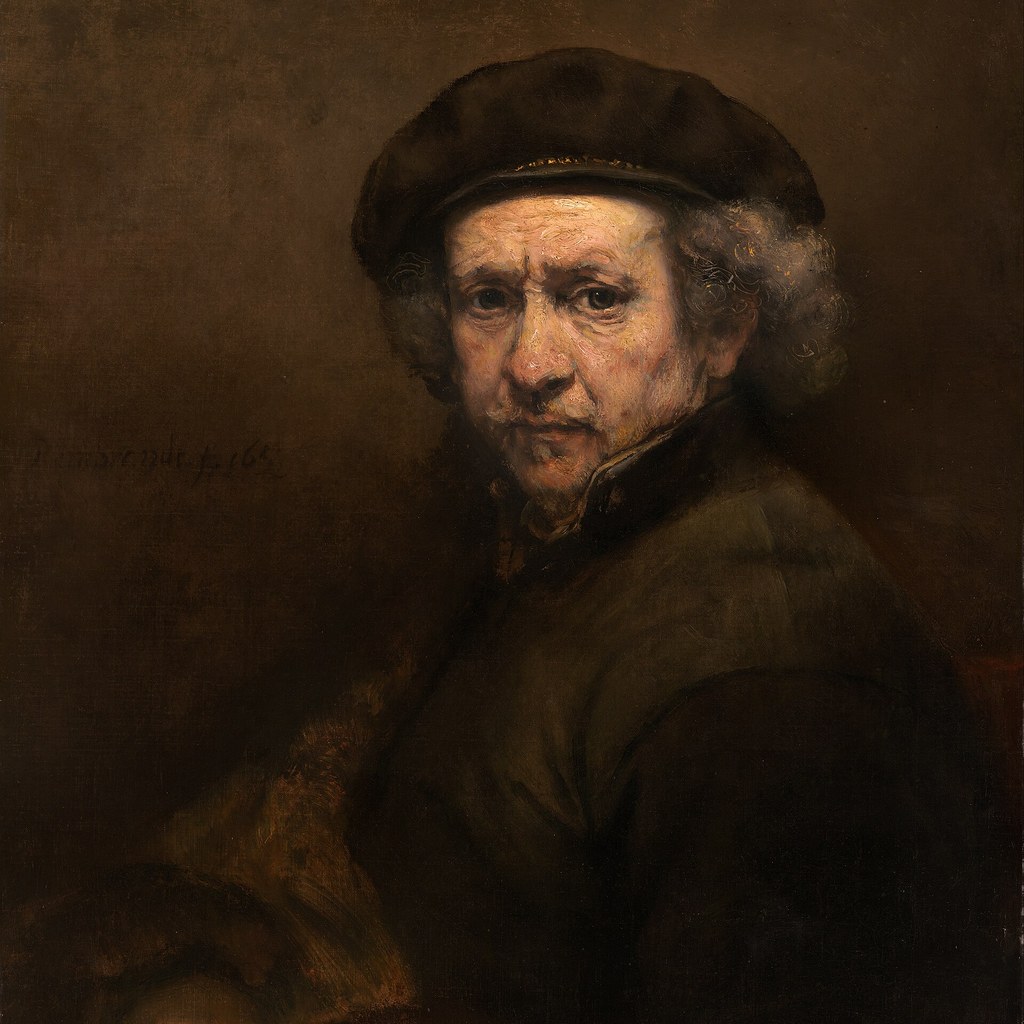 Rembrandt's Self-Portrait
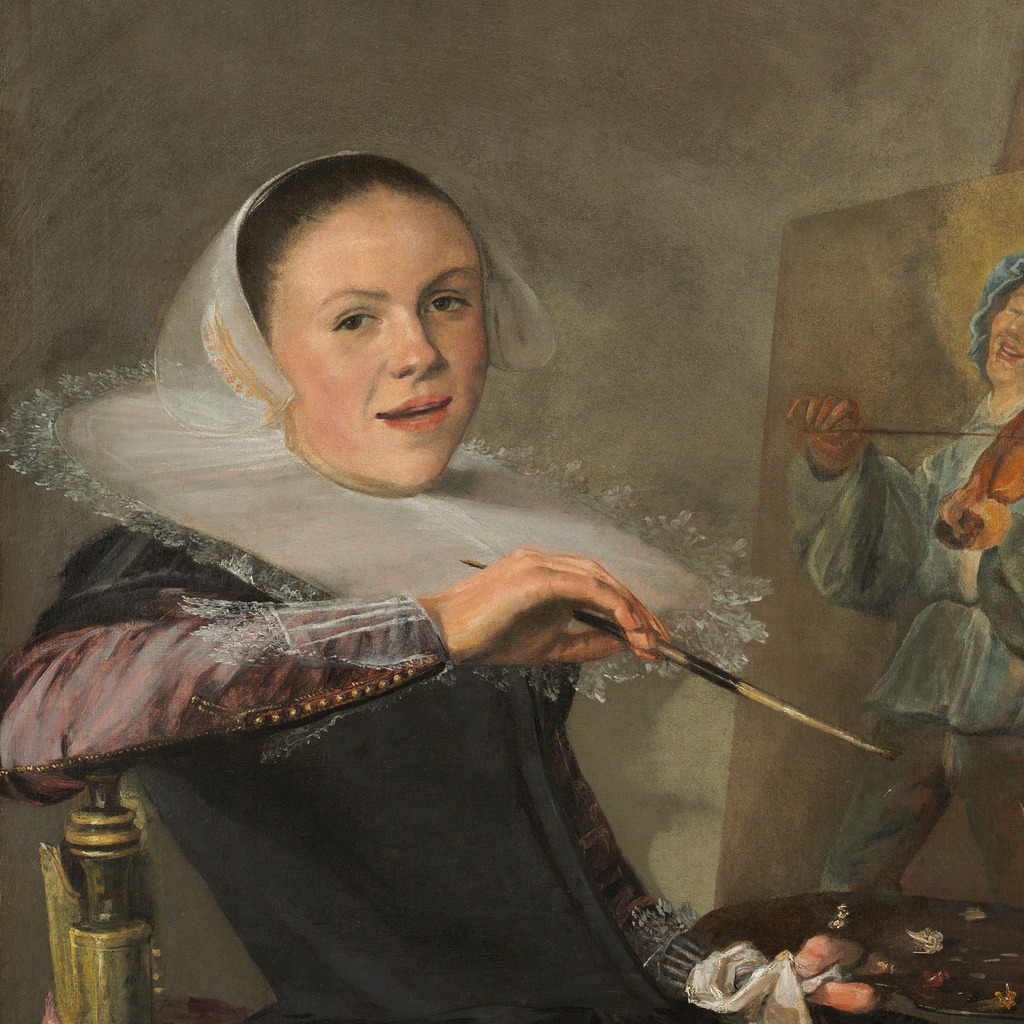 Judith Leyster
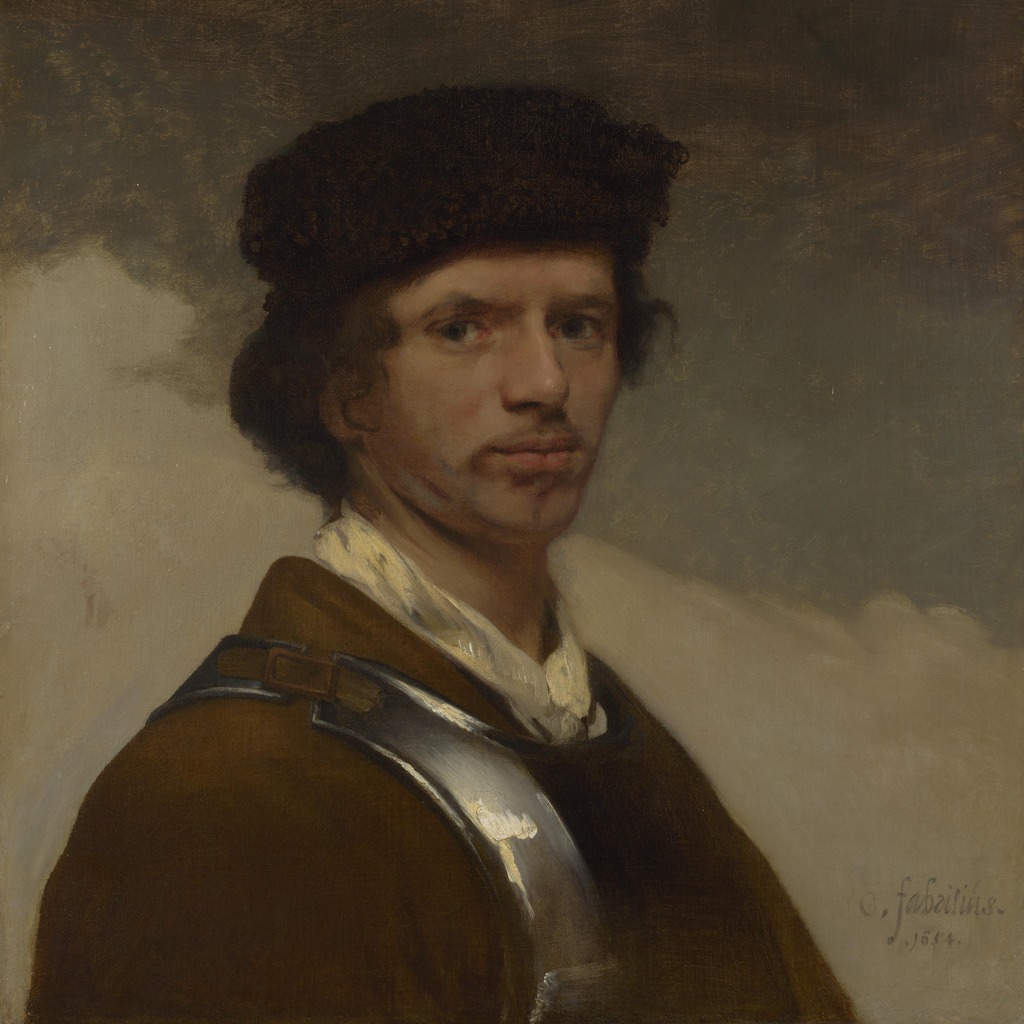 Carel Fabritius
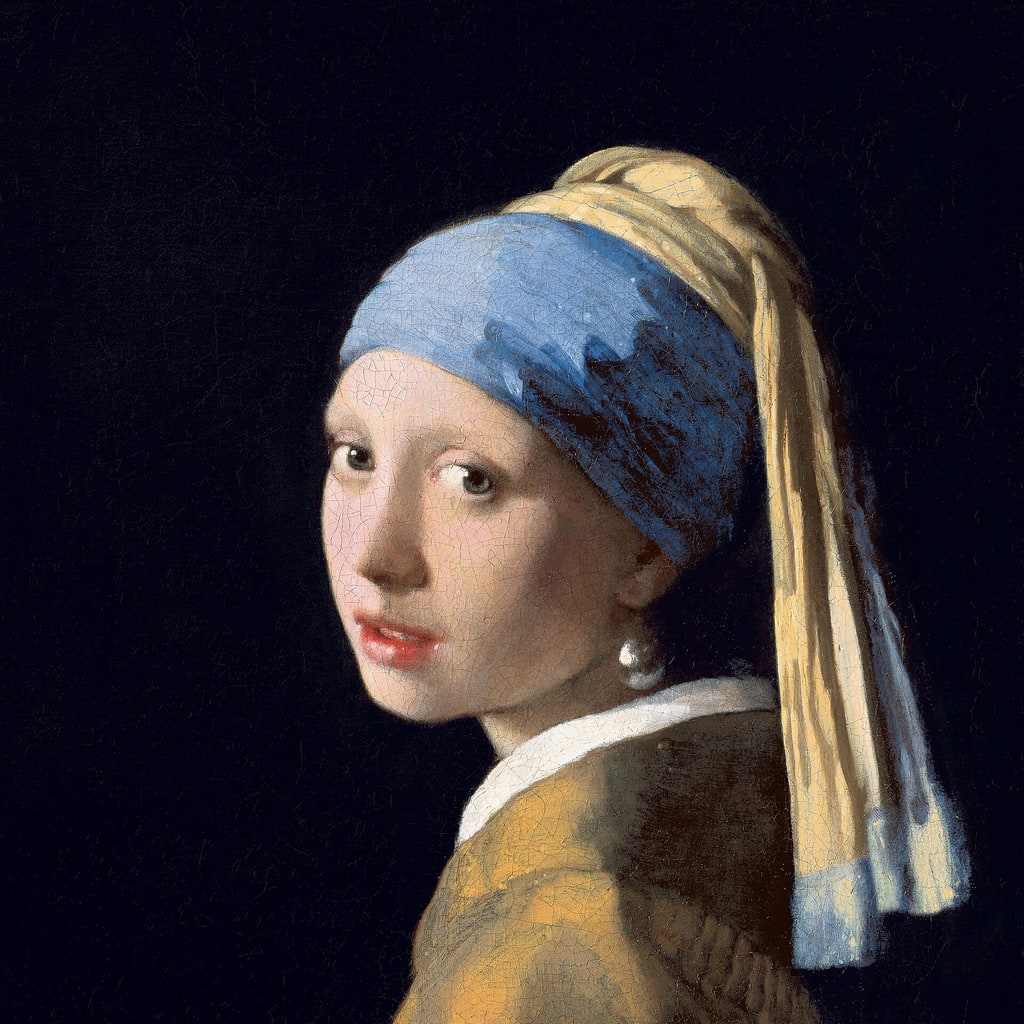 Girl with a Pearl Earring
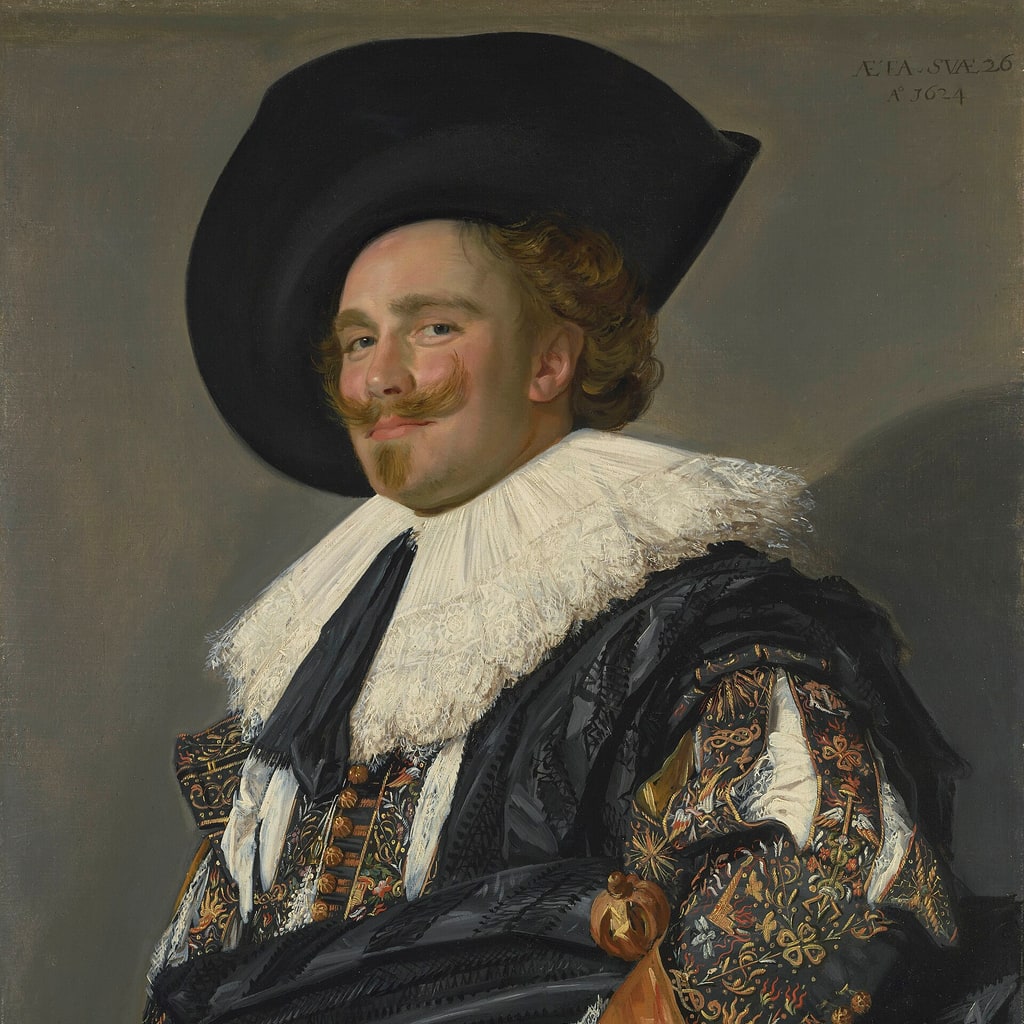 The Laughing Cavalier
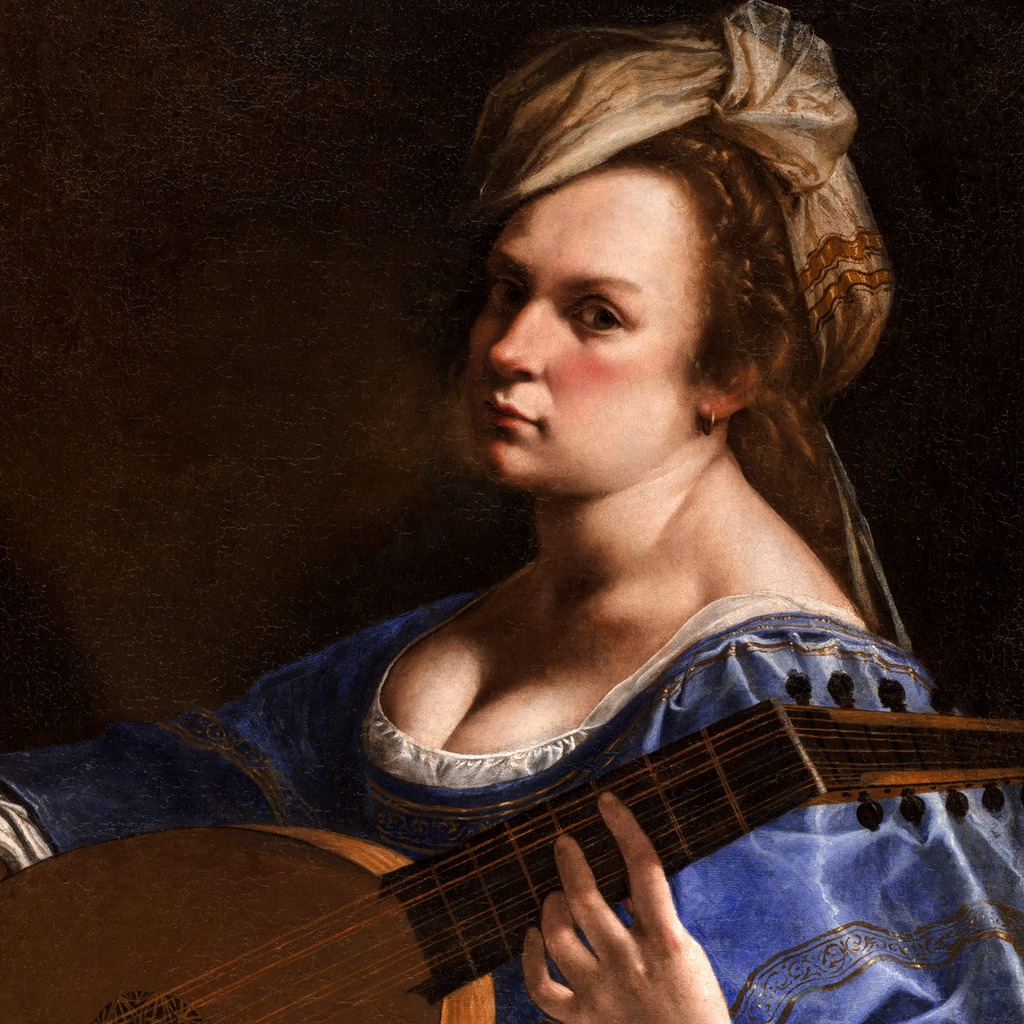 Artemisia's Self-Portrait
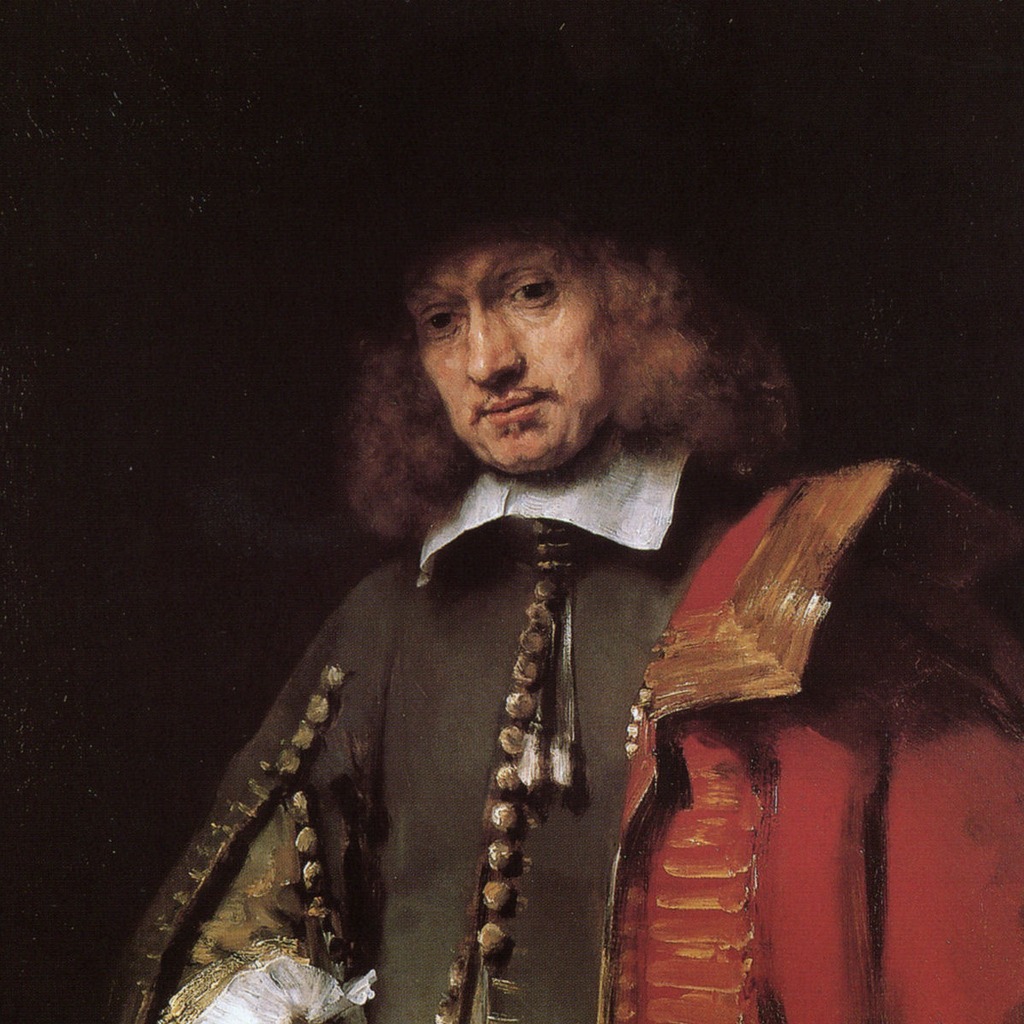 Jan Six
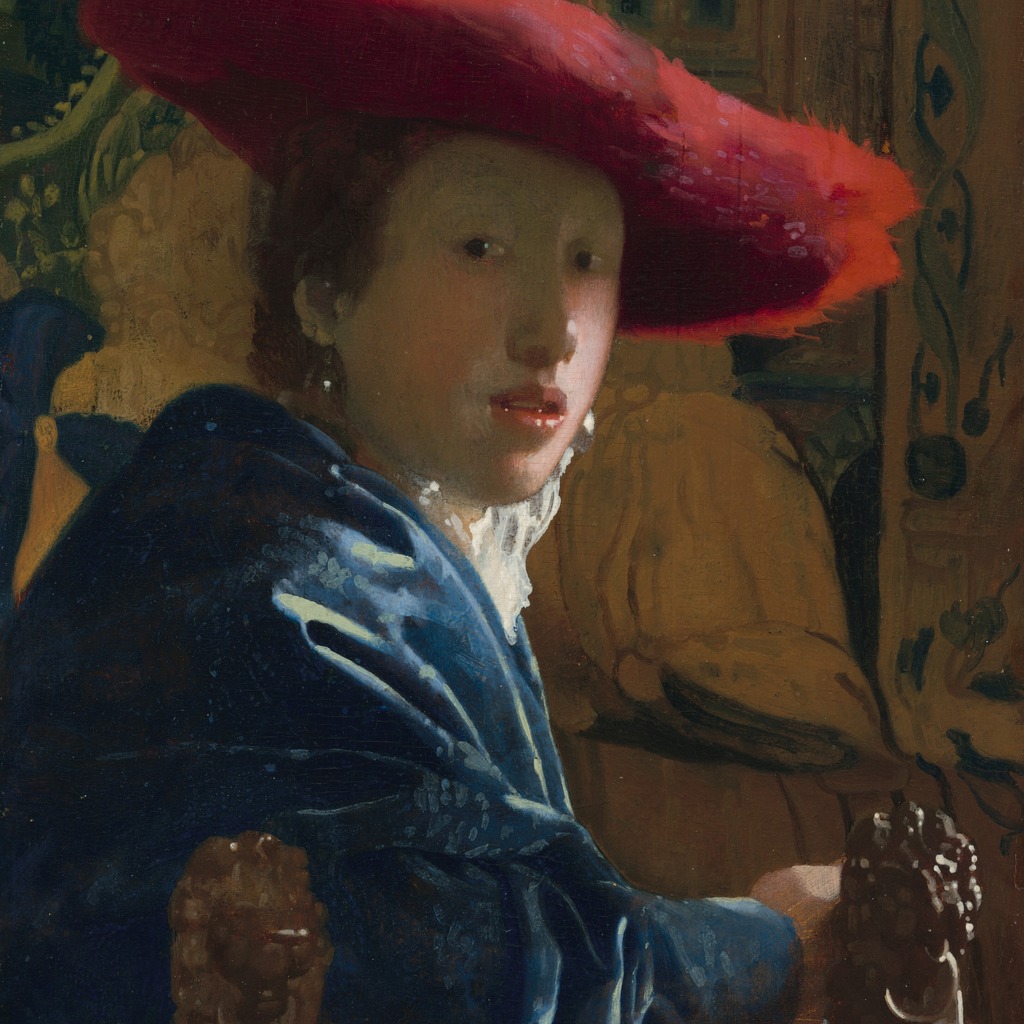 Girl with a Red Hat
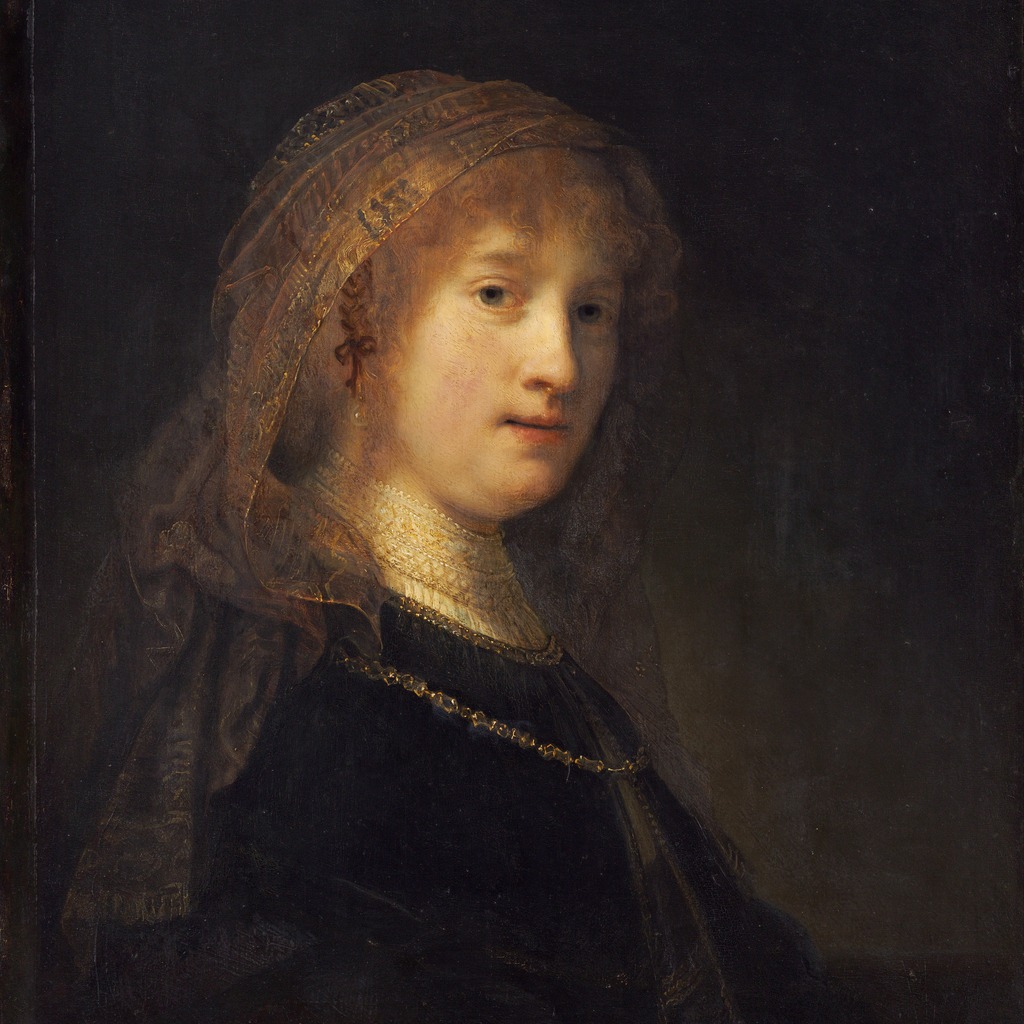 Saskia
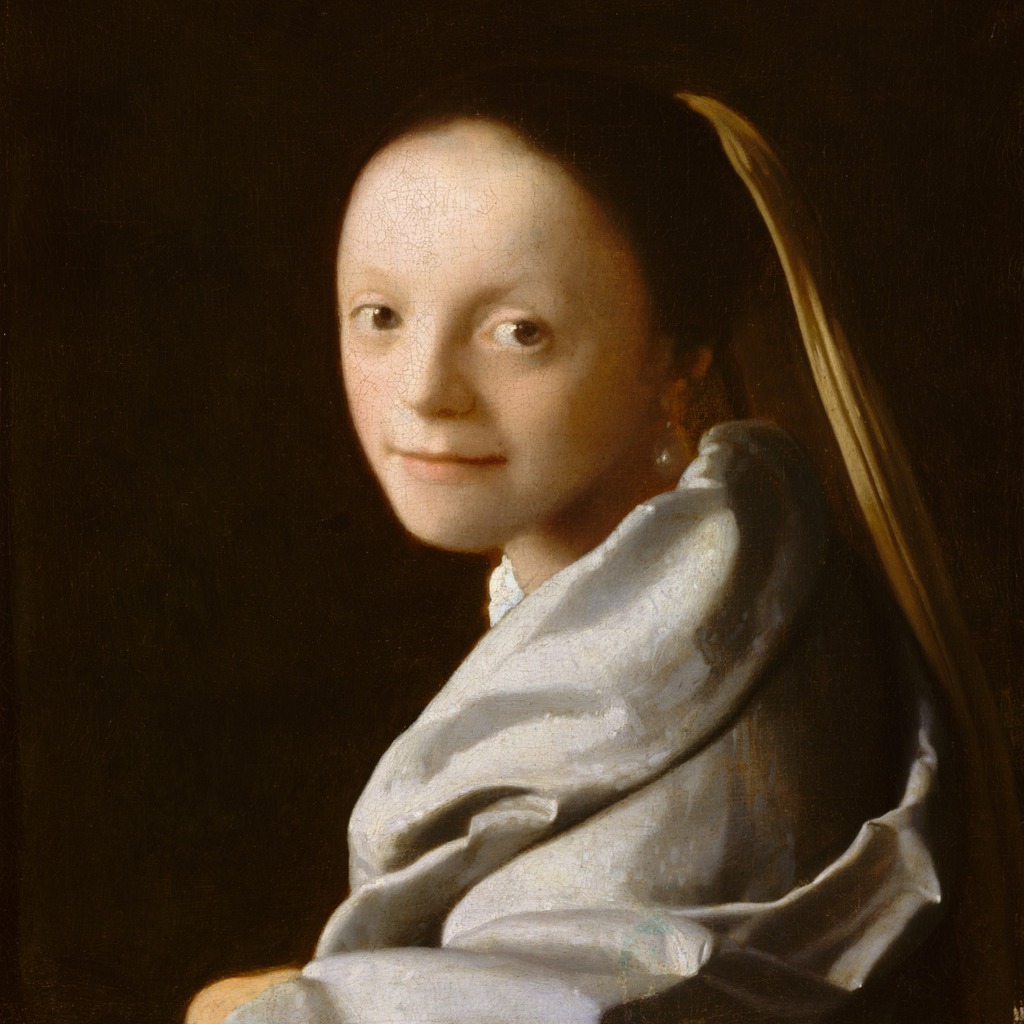 Portrait of a Young Woman
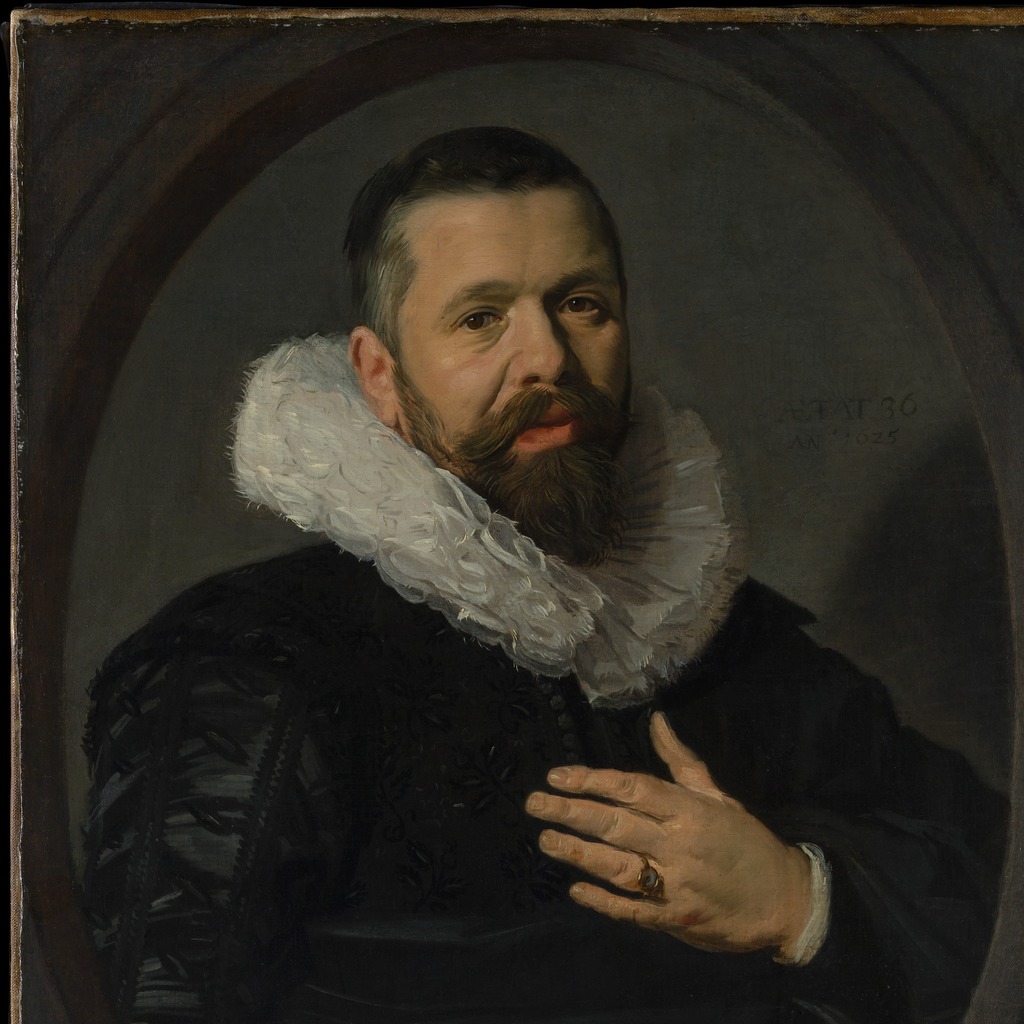 Bearded Man with a Ruff
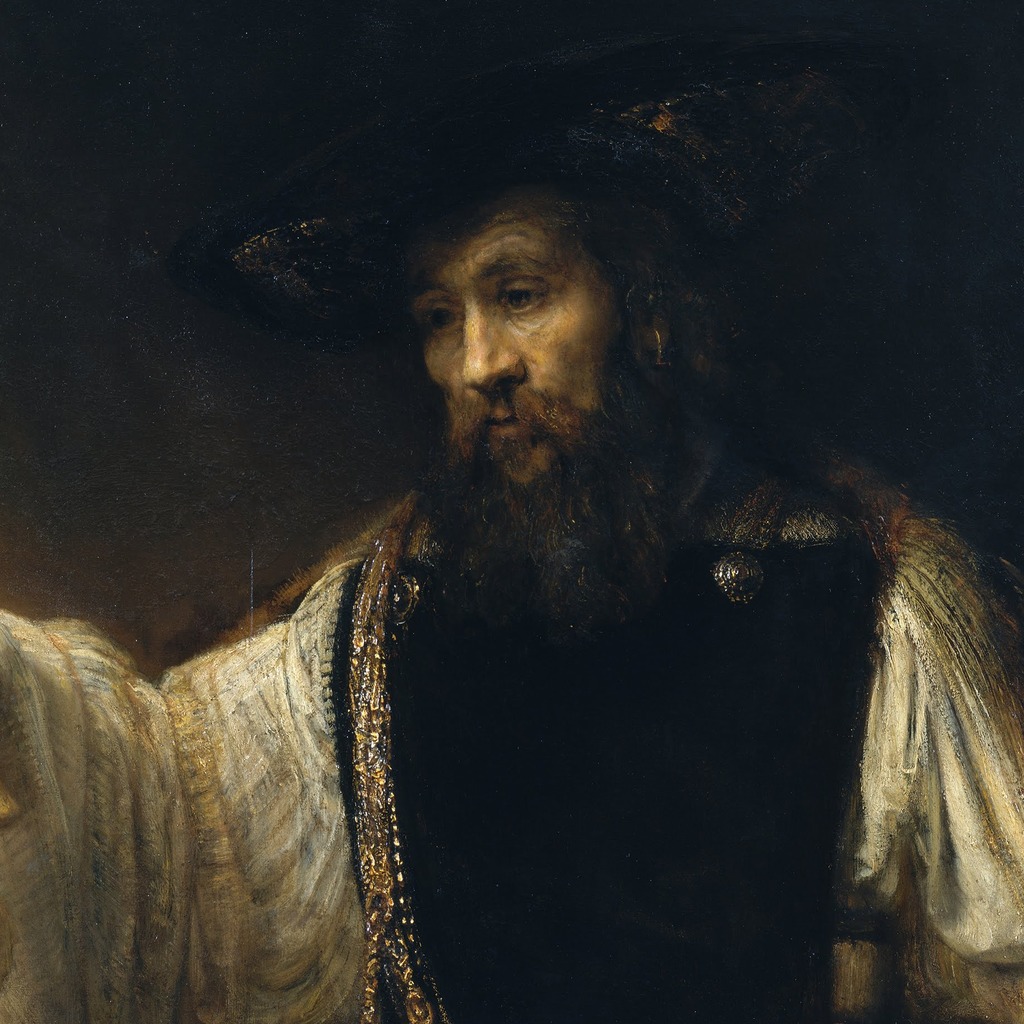 Aristotle with a Bust of Homer
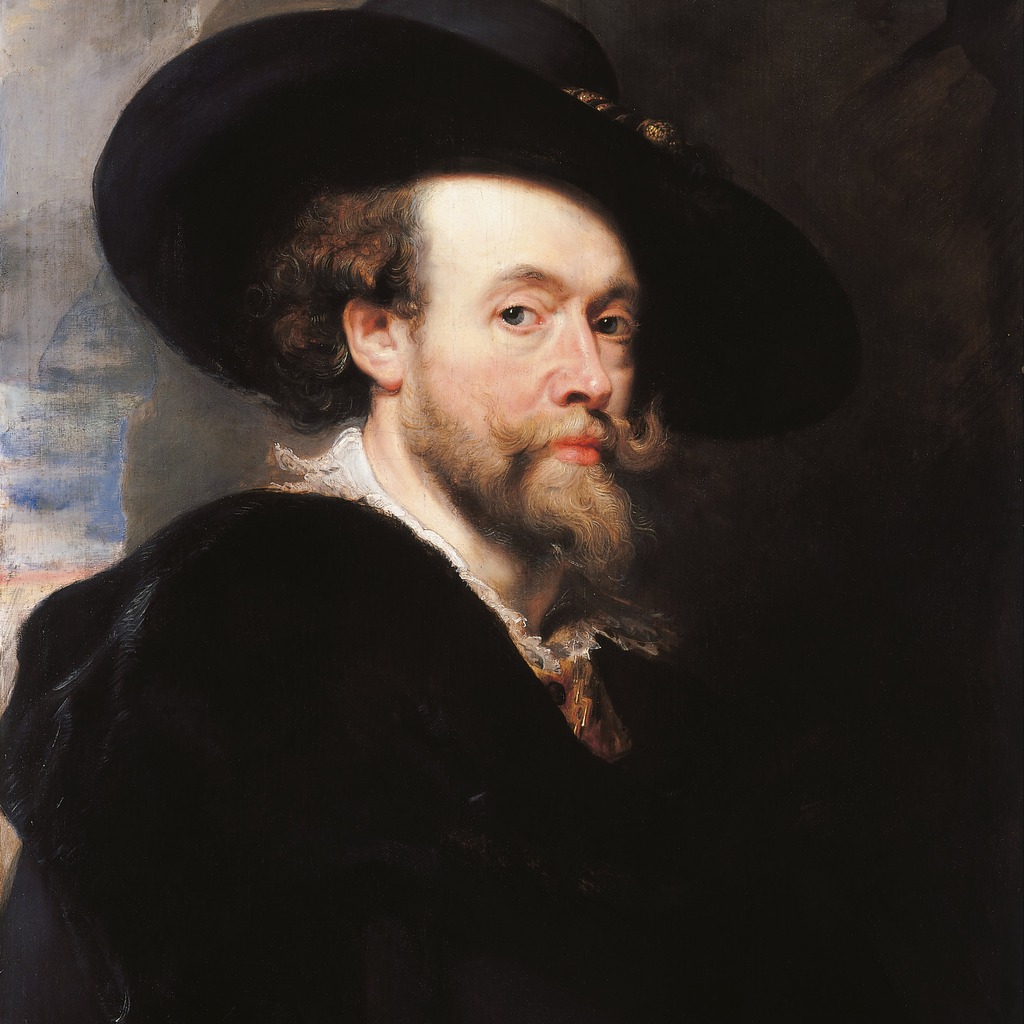 Rubens
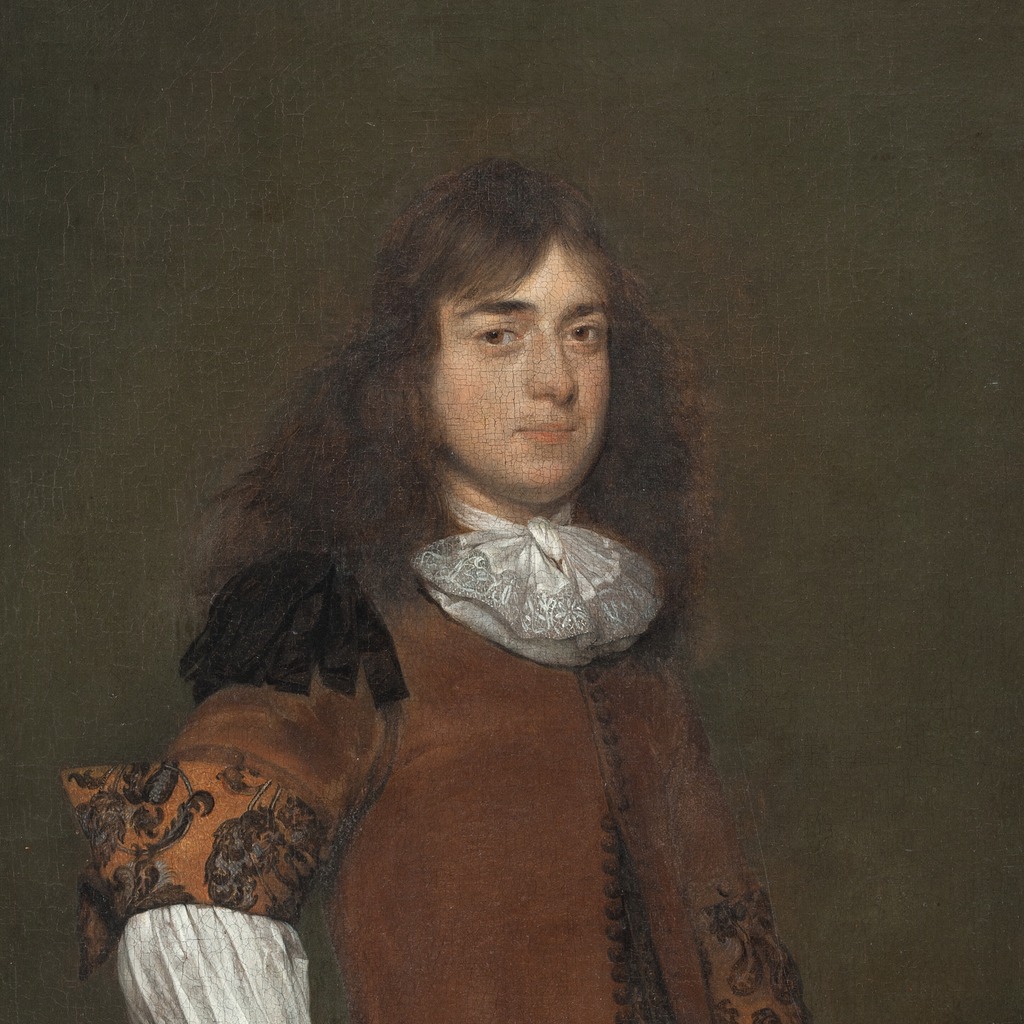 Ter Borch: Portrait of a Man
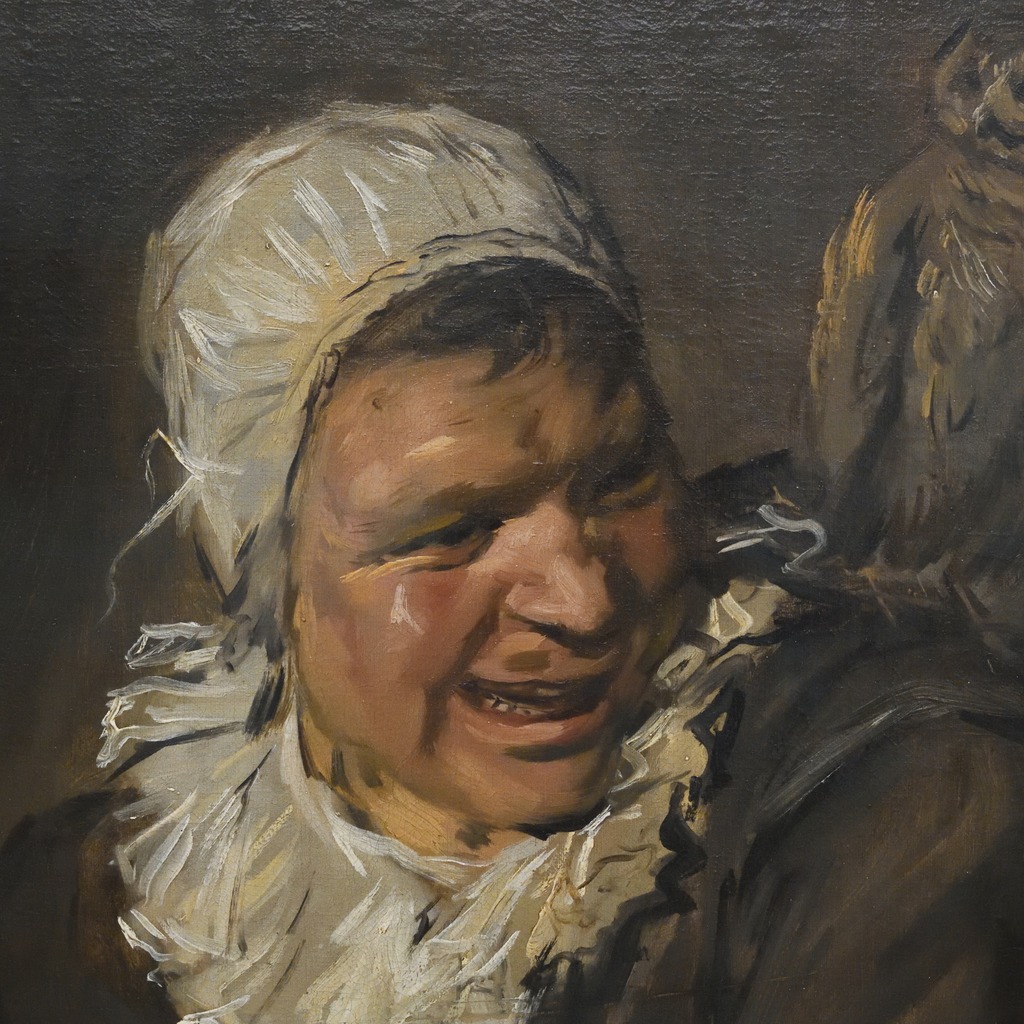 Malle Babbe
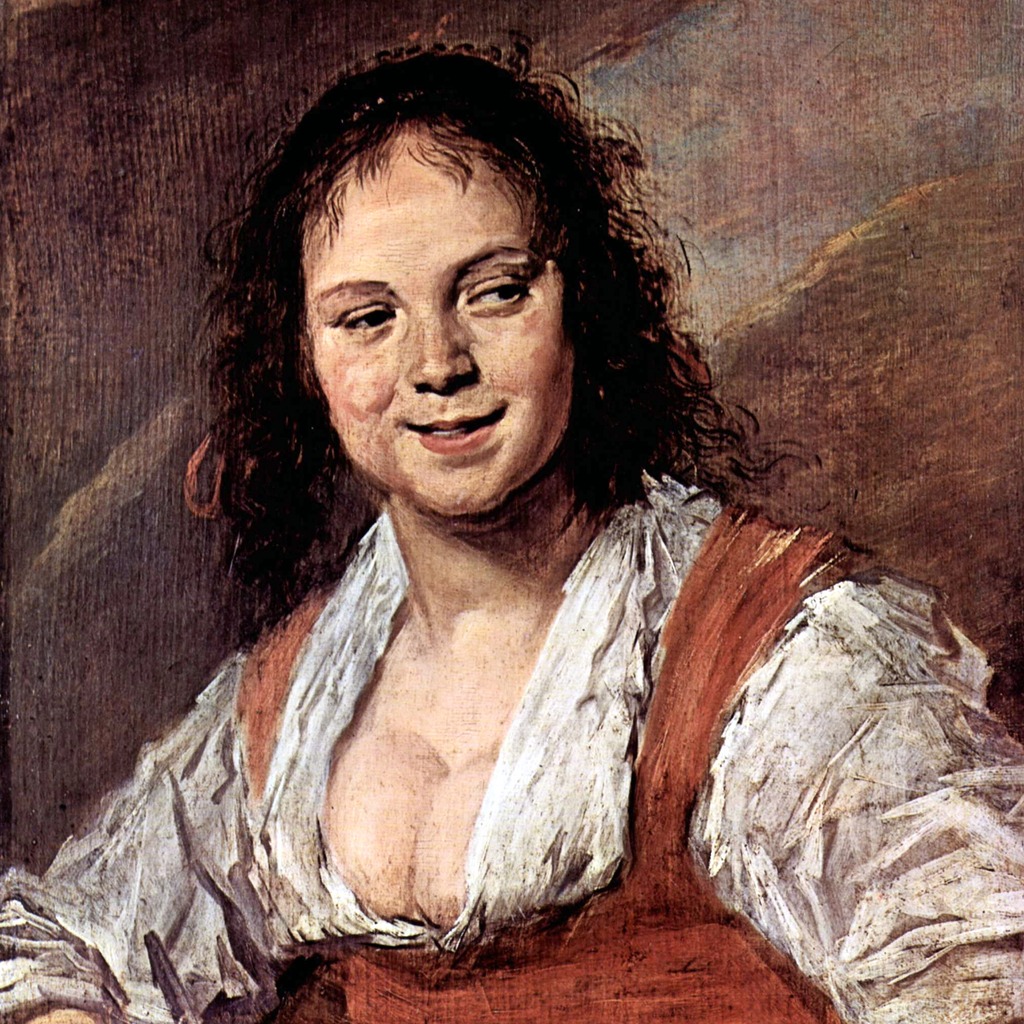 La Bohémienne
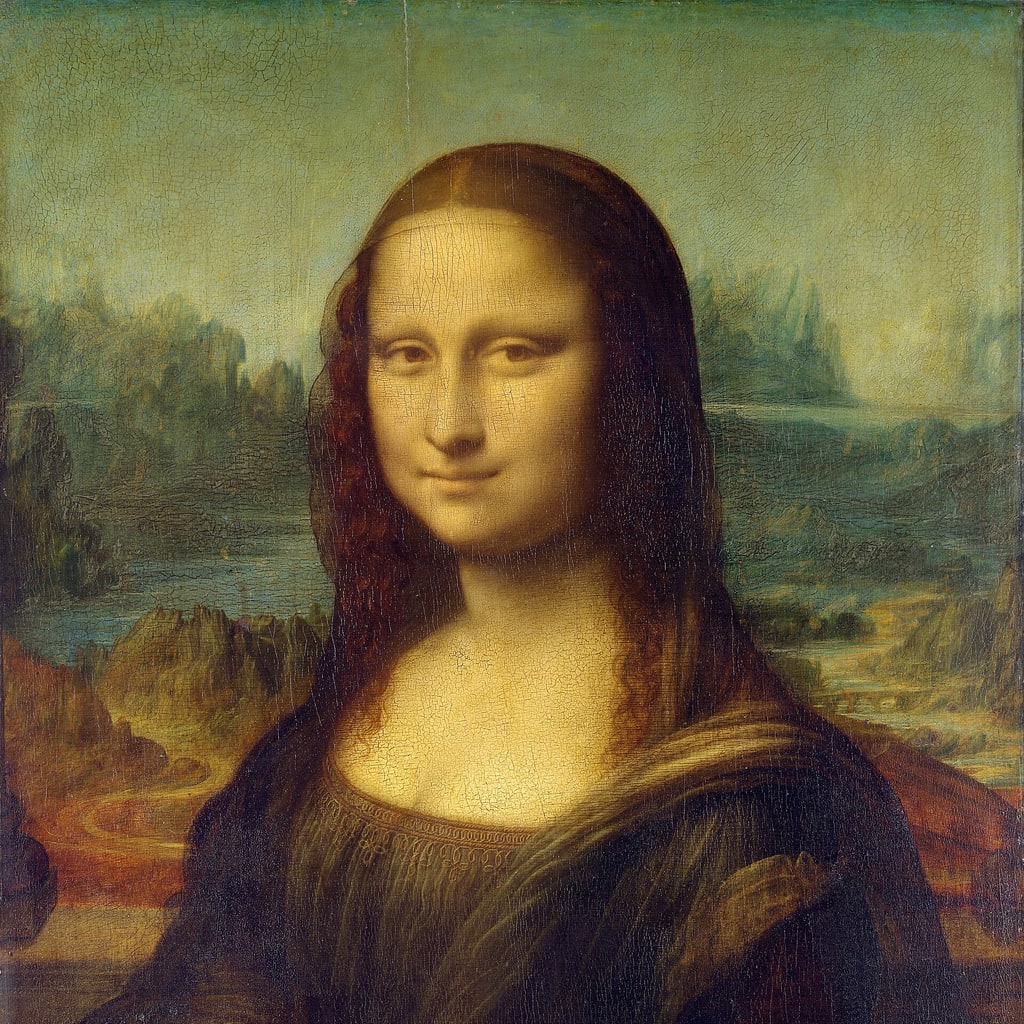 Mona Lisa
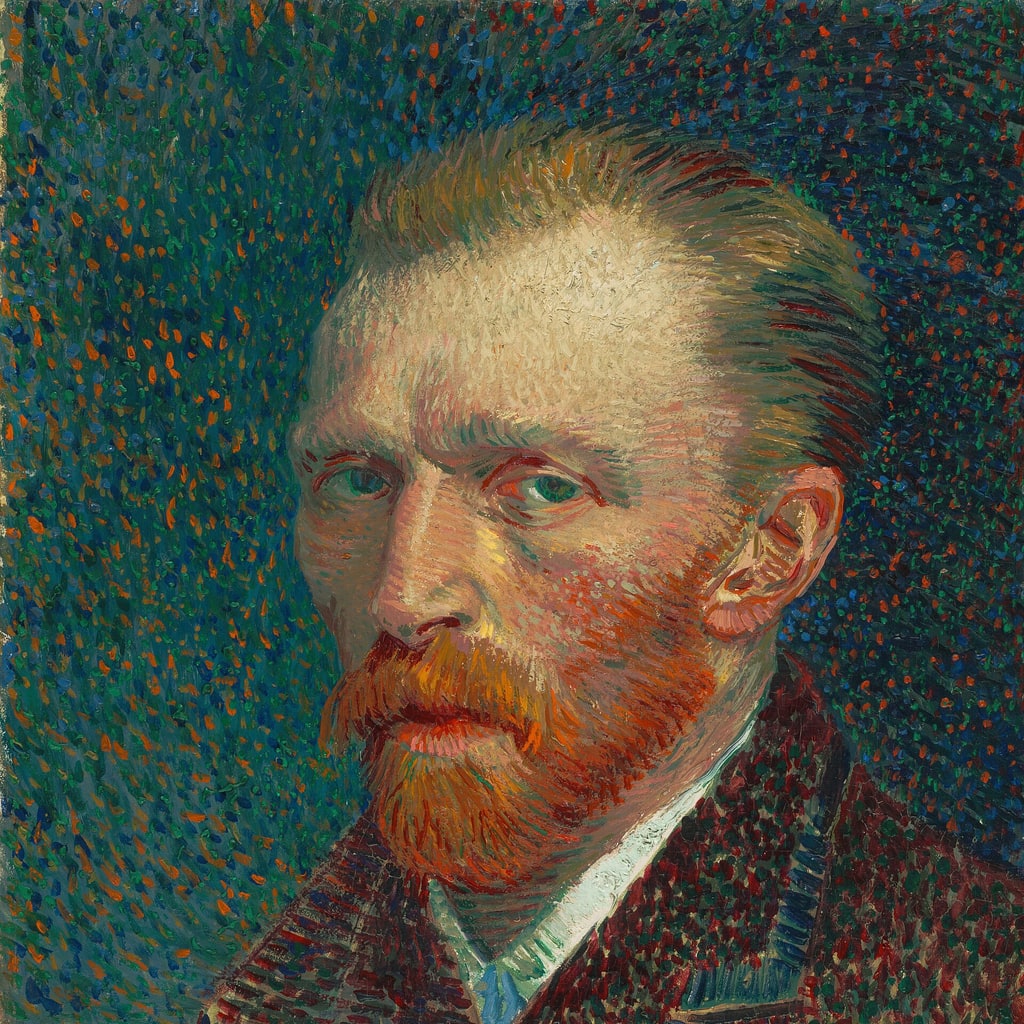 Van Gogh Self-Portrait
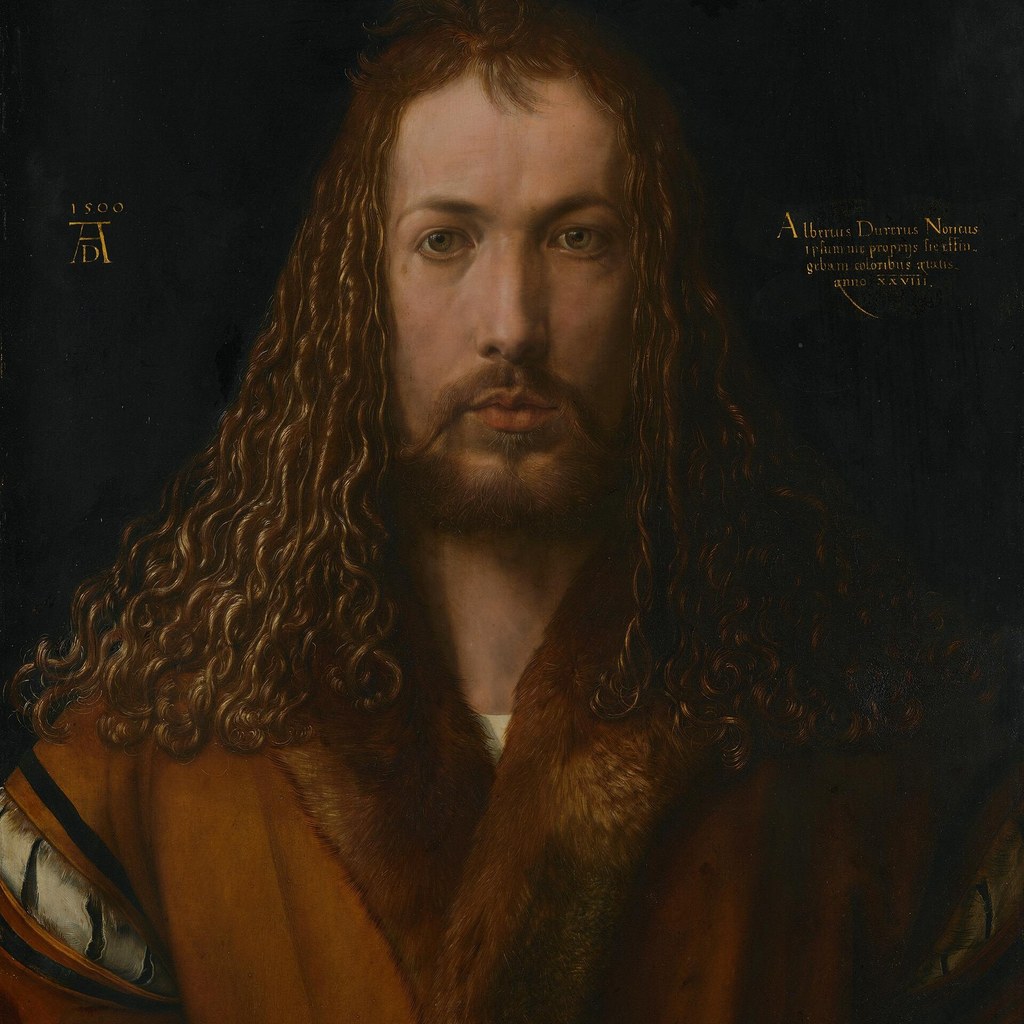 Dürer's Self-Portrait
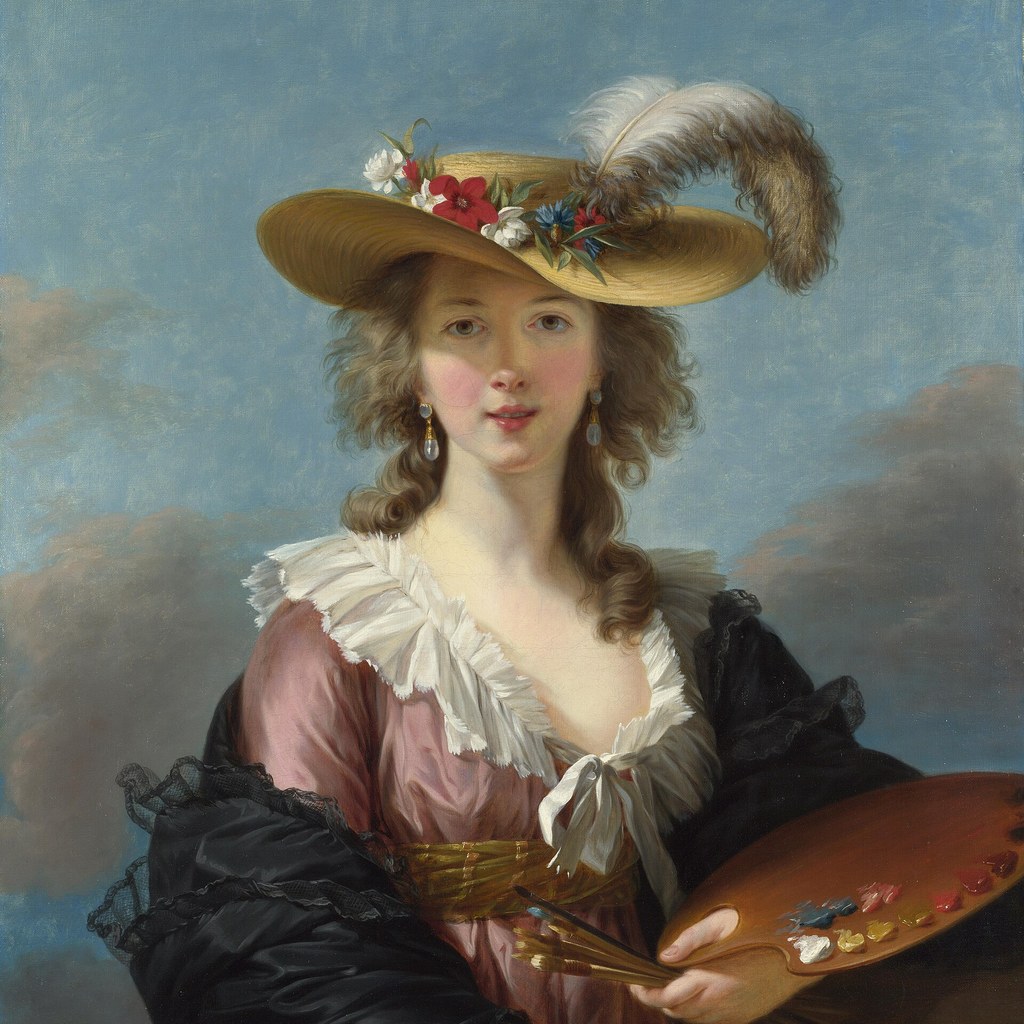 Self-Portrait in a Straw Hat
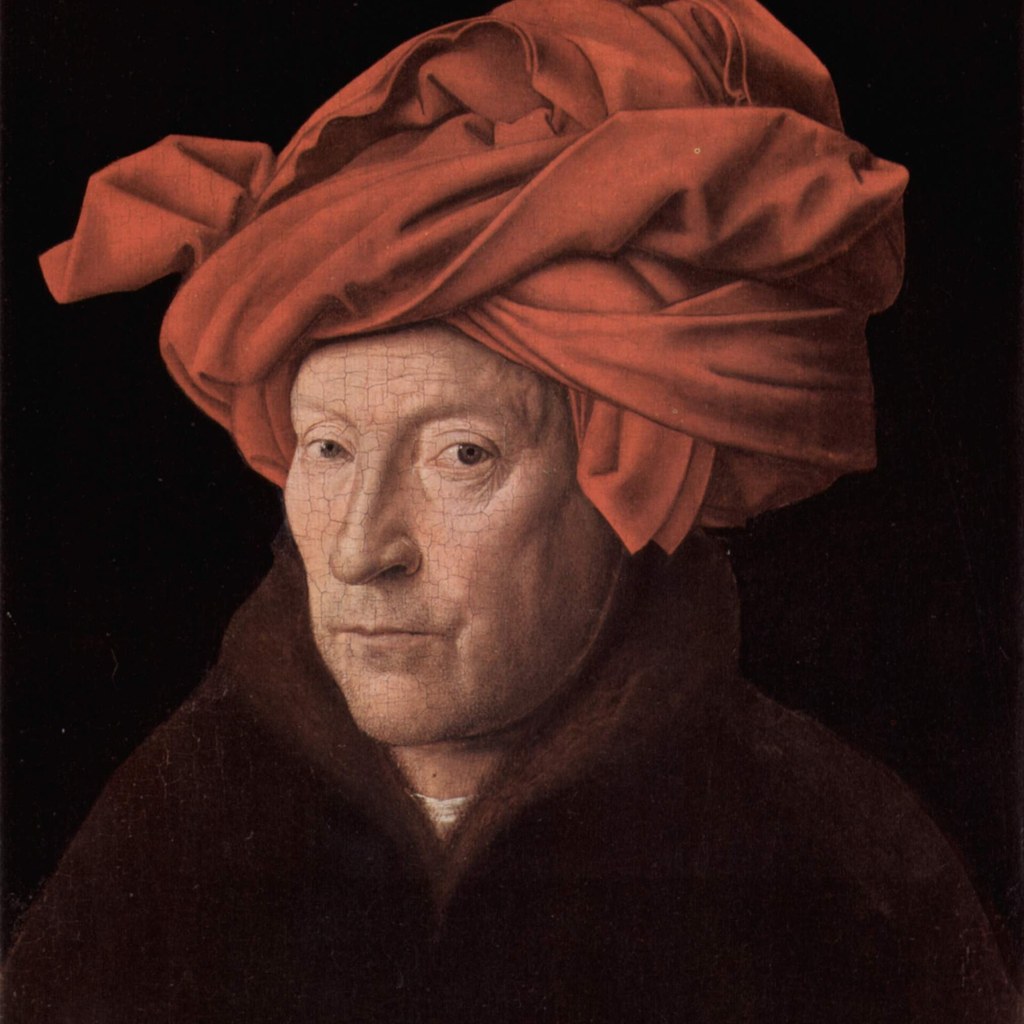 Man in a Red Turban
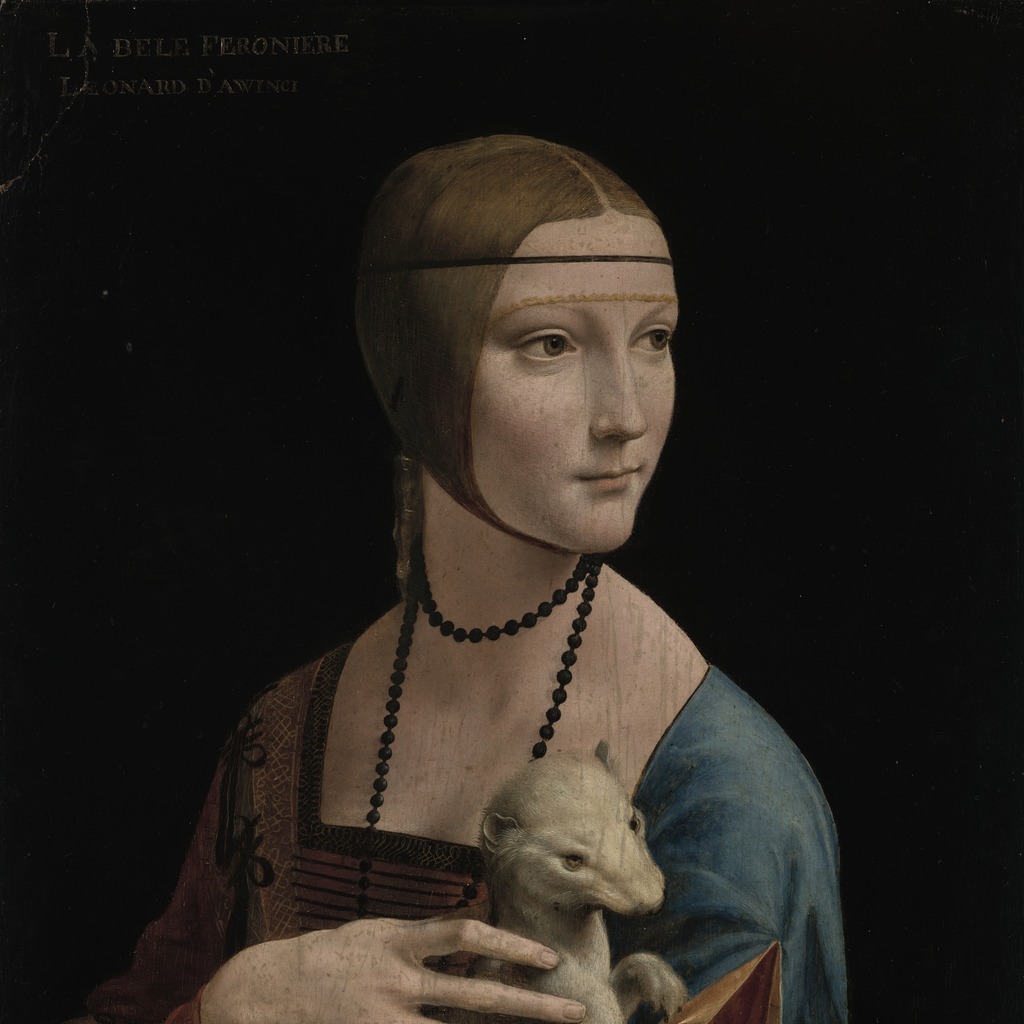 Lady with an Ermine
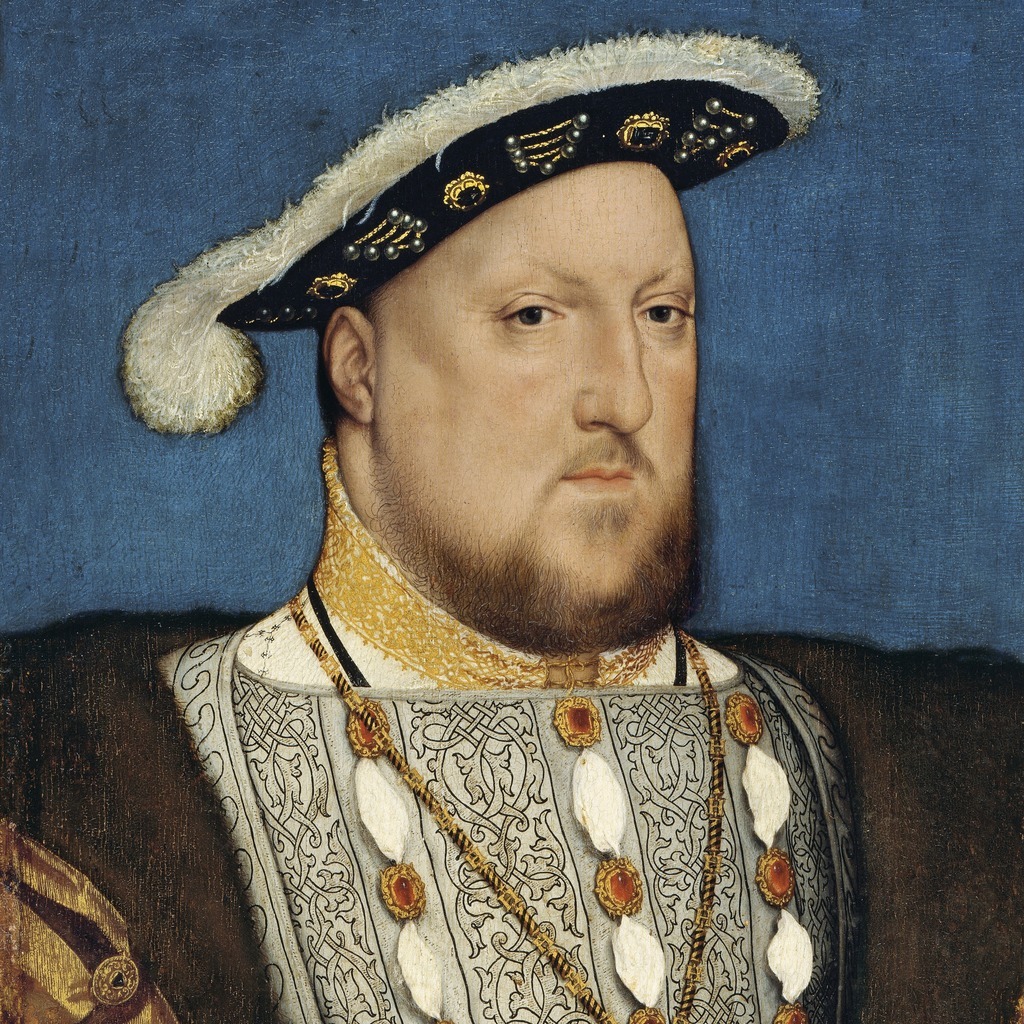 Henry VIII
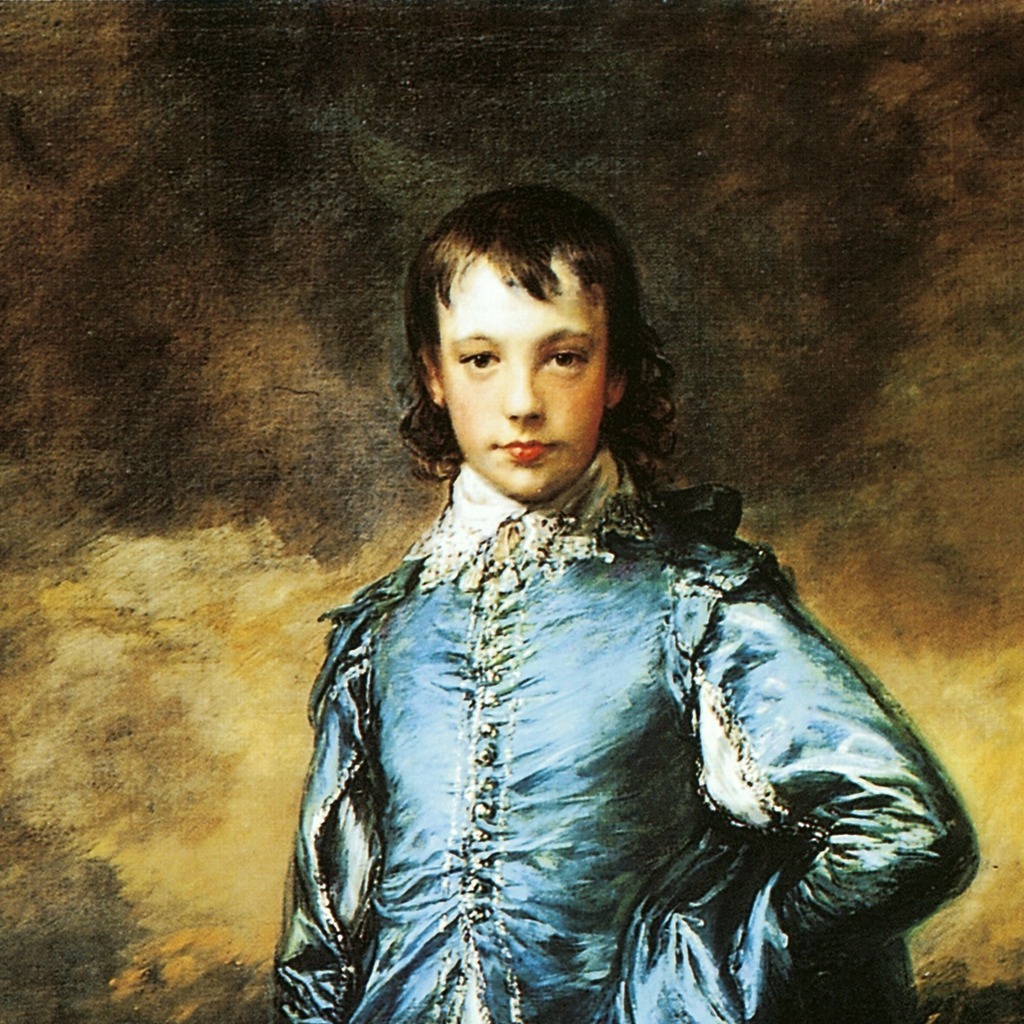 The Blue Boy
Questions
What is a Jan Steen household?
A Dutch expression for a home in happy disorder, taken directly from his paintings of chaotic families. It is still in everyday use in the Netherlands, which is an unusual afterlife for a seventeenth-century painter.
Did he really run a tavern?
He leased a brewery in Delft in the 1650s and was licensed to run an inn in Leiden later on. Painting was the main income, but the second trade is hard to separate from the subject matter.
Why is he laughing?
Because almost nobody in a seventeenth-century portrait does, and he knew it. Open mouths and visible teeth were considered low and undignified, which made them exactly right for a painter whose whole subject was people behaving badly.
Is it free?
Yes. There is a limit on how many you can make in a day, and sharing one earns the allowance back.
Do you keep my photo?
No. Your selfie is used to make the image and then dropped — it is never written to disk. The finished meme is stored, because it has a link people can open, and it is deleted after 90 days.
Can I use someone else’s face?
Please do not. Use your own. Putting a real person into a picture they did not agree to is exactly the thing this is not for.
Can I post the result?
Yes, anywhere you like. The paintings are public domain; what you make with your own face is yours.